Ryan Murray | Co-Owner | Chief Editor |Contributor | Photographer
r.m.music84@gmail.com

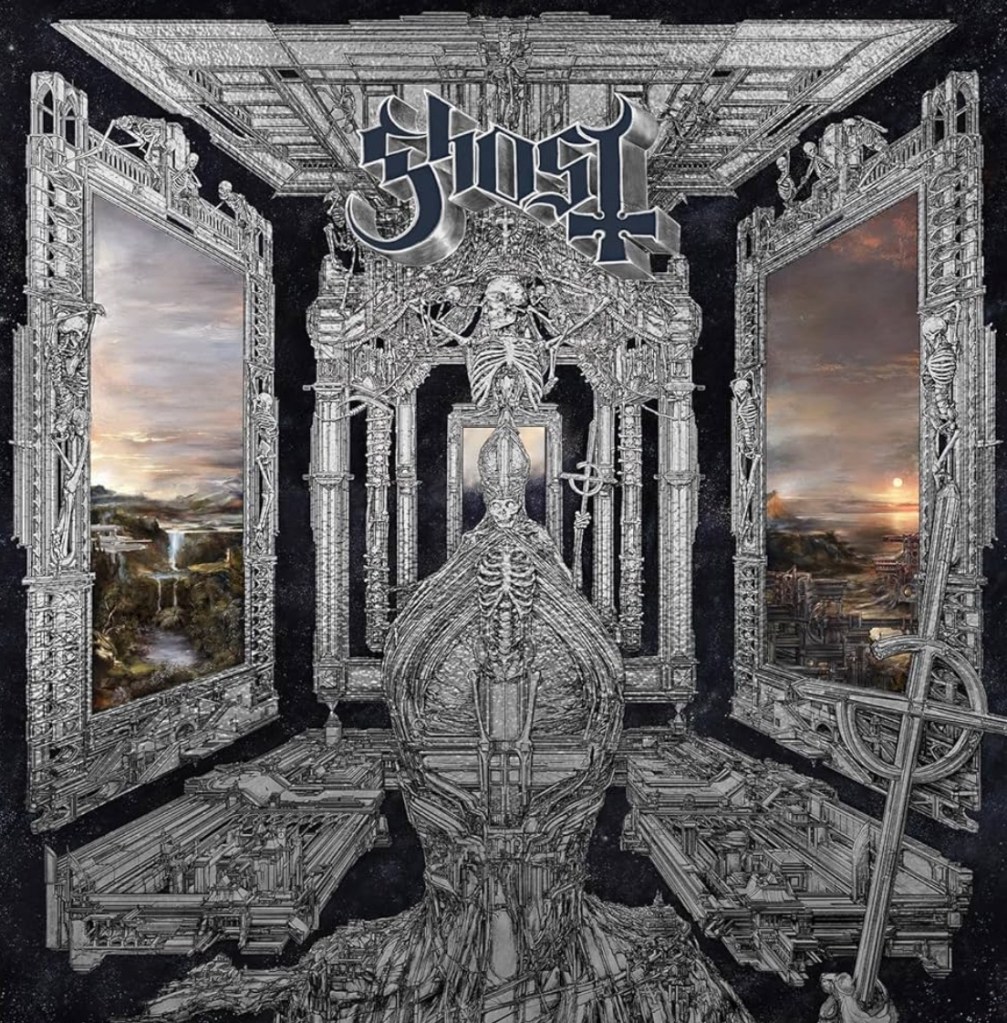
When it comes to Ghost, the expectation is always more than music. It’s pageantry, provocation, and the sense that beneath the robes and smoke machines, something wonderfully wicked is unfolding. And for nearly two decades, Tobias Forge has delivered just that—a devilish theatricality dressed up in shimmering metal and papal satire. But on Skeletá, the band’s latest offering out Friday, April 25 via Loma Vista Recordings, Ghost strips back the grandeur just enough to show us what’s beating beneath the skull-painted surface. The result? An emotionally resonant, hook-laden album that’s clean, clear, and hauntingly personal—but one that also, at times, leaves us craving the band’s usual bite.
Let’s be clear: Skeletá isn’t Ghost going acoustic and crying in a candlelit cathedral. It’s still electric. It’s still dark and it’s still pretty damn catchy. But unlike earlier albums that swaggered with bombast and brimstone—Impera, Meliora, Prequelle—Skeletá feels like a deliberate exhale. It trades pomp for polish, spectacle for intimacy. And for the most part, it works beautifully.
This record doesn’t kick the door open—it kind of slides into the room, makes eye contact, and dares you to come closer. And when you do? You’re rewarded with something far more intimate than expected. Gone are the thunderous overtures of Impera or the theatrical swagger of Prequelle. In their place is a slower, stripped-back sound that, for all its restraint, feels intensely deliberate. It’s moody, personal, and at times, hauntingly beautiful.
That shift becomes clear from the very beginning. Peacefield doesn’t explode so much as it unfurls. There’s this unsettling innocence to the children’s voices that fade into synthy mist before the full arrangement comes in. It’s like the calm after a ritual, when the smoke clears and all that’s left is reflection. Ghost has always been theatrical, but this is the first time it feels like they’re telling you the story without the stage.
The album is at its strongest when it leans into that sense of vulnerability. Tracks like Lachryma and Umbra move slowly—not in tempo, but in how they unfold, like a story being told in hushed tones. Like a prayer muttered under breath. Forge’s voice isn’t cloaked in pomp here—it’s exposed. Human. The melodies don’t demand your attention—they lure it. There’s something beautifully subversive about a band known for blood-soaked rituals turning instead toward quiet confession. It’s not that the darkness is gone—it’s just more introspective now.
Still, Skeletá isn’t entirely devoid of fire. Satanized arrives with that signature Ghost bravado, all stomp and snarl, made for big stages and bigger singalongs. It might be one of the more divisive cuts here—it’s cheeky, brash, and almost feels like an outtake from a heavier era—but there’s no denying it’s fun. And right when you think the band might be losing some of their flair, Guiding Lights crashes in with arms wide open. It’s a stadium-ready power rock ballad that works because Ghost doesn’t wink. They commit. They mean it.
What’s most compelling is how the album moves between tones like chapters in a very weird, very emotional book. De Profundis Borealis and Cenotaph dive into deeper shadows, threading doom through delicate production. The riffs are heavy, sure, but they don’t crush—they drag you under slowly. And again, it’s the clarity that’s striking. Every layer in the mix has room to breathe. The guitars brood without overwhelming. The synths shimmer. The drums don’t compete—they complement. It’s some of the cleanest, most balanced production Ghost has ever pulled off.
And just when things might get too self-serious, they let loose. Missilia Amori is absolutely one of the strangest tracks in Ghost’s catalog—and that’s saying something. It’s as if a medieval bard got lost in a neon-lit arcade and decided to record a power ballad. Somehow, it’s charming. It throws out all expectations and dares you to go with it, and once you do, you find yourself kind of in love with how bizarre and romantic it all is. That’s Ghost’s genius—they make the absurd feel sacred.
Marks of the Evil One re-centers the record with swagger and menace. It’s familiar territory—a dark groove, a devilish grin, a chorus that could probably summon something if you played it backward. But it doesn’t feel recycled. It feels like a statement: “We still remember how to conjure the old flames.” And as the album closes with Excelsis, there’s this sense of earned elevation. It’s not bombastic. It’s not drenched in ritual. It just…rises, and quite hauntingly at that. Like a soul being released. Like something ending, not with thunder, but with grace.
Now, is Skeletá perfect? No. And it’s not trying to be. There are moments where you might find yourself craving more chaos, more of that classic Ghost theatrics. A few tracks simmer rather than sizzle. The hooks are there, but they don’t always bite as hard. And if you’re someone who lives for Ghost’s sense of high drama, this might feel a little too dialed down. But that’s the point, isn’t it? Ghost isn’t repeating themselves. They’re shifting. Exploring. And the risk largely pays off.
What this album really does is strip Ghost down to the bone—hence the title. And in doing so, it reveals something we haven’t fully seen before: vulnerability, nuance, restraint. It’s not just about darkness and spectacle anymore. It’s about scars and solitude. Skeletá might not be their boldest record, but it’s quite possibly their most honest. And there’s something deeply powerful in that.
For longtime fans, it’ll hit differently. It rewards patience. It lingers longer. And for newcomers, it offers a surprising entry point—one less cloaked in fire and more bathed in fading candlelight. As far as evolution goes, Ghost didn’t just take a step forward here. They opened a new door entirely.
So sure, it may not be the Ghost album people expected. But it’s definitely the one they needed—even if they don’t know it yet.
VERDICT: 4.0/5.0
 Ethereal Metal
Leave a comment