Ryan Murray | Co-Owner | Chief Editor | Contributor | Photographer
r.m.music84@gmail.com

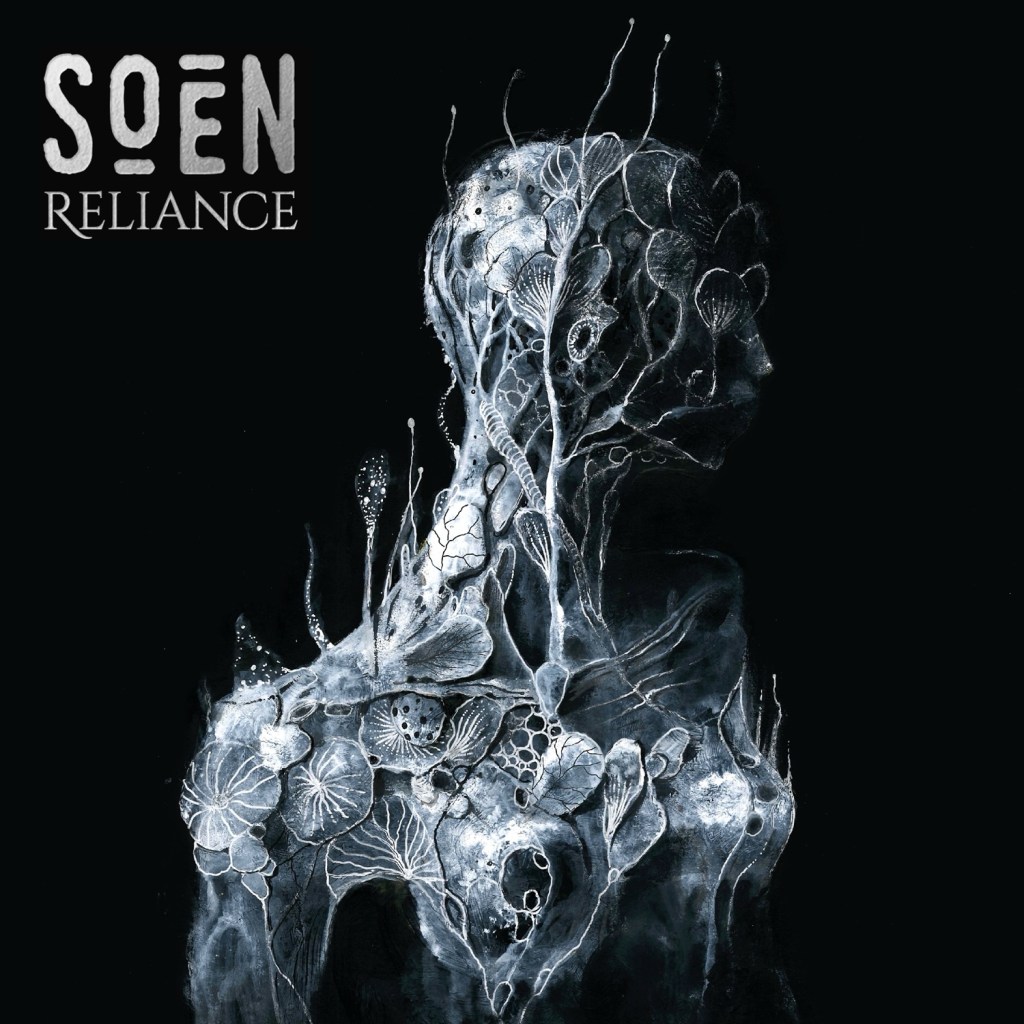
Soen’s upcoming album Reliance, out Friday, January 16th via Silver Lining Music, is not a record that kicks the door in just for the sake of volume or virtuosity. Instead, it opens slowly, deliberately, like a deep breath before confession. It’s an album that understands restraint as power, emotional clarity as weight, and heaviness as something far more complex than distortion alone. While longtime fans will immediately notice that Soen has eased back from the more labyrinthine time signatures that once defined much of their earlier progressive leanings, what they’ve gained in return is something arguably far more enduring: emotional directness, melodic purpose, and a sense of uplift that persists even when the subject matter turns inward, dark, or uncomfortably human.
And that’s something that is established immediately with album opener Primal, which acts as a thematic gateway into Reliance, tapping into raw instinct and internal conflict while setting the emotional tone for everything that follows. Rather than overwhelming, it simmers with tension and intent, grounding the album in a sense of human fragility and resolve from the very first moments.
This is not a band abandoning complexity — it’s a band refining it.
Where earlier Soen albums often dazzled through rhythmic gymnastics and layered intricacy, Reliance feels like a conscious narrowing of focus. The structures are more accessible, yes, but accessibility here doesn’t mean simplicity. It means intention. Every riff, every dynamic shift, every melodic turn feels chosen rather than showcased. There’s a confidence running through this album that says Soen no longer needs to prove how clever they are. They’re far more interested in how deeply they can make you feel, and Reliance reaches places that linger long after the final note fades.
One of the most striking things about Reliance is how it balances darkness with light. Soen has always been a band willing to explore heavy emotional terrain — grief, disillusionment, inner conflict, existential searching and the like, but this album feels uniquely committed to finding something hopeful within those spaces. Even at its most crushing, Reliance never wallows. There’s always a melodic lift, a harmonic glow, or a lyrical turn that pulls your gaze upward. It’s an album that acknowledges pain without surrendering to it, and that perspective gives the record a quiet, persistent radiance.
And make no mistake: when Reliance wants to be heavy, it absolutely is.
Some of the riffs on this album are among the heaviest Soen has ever written. Tracks like Mercenary, Axis, and Huntress deliver a weight that feels grounded, muscular, and unflinchingly direct. These aren’t flashy riffs; they’re massive slabs of sound that move with purpose, anchoring their latest offering in a sense of grit and resolve. The heaviness here isn’t about aggression for just aggression’s sake, but about tension — the push and pull between strength and vulnerability that defines much of Reliance’s emotional core.
What has always been impressive is how naturally Soen has woven heaviness into the emotional core of their music across every release. On Reliance, that balance feels especially staggering, with crushing moments arriving not as interruptions, but as emotional punctuation, strengthening the album’s impact rather than pulling focus from it. Mercenary and Axis, for example, don’t exist in isolation as bruisers; they’re framed by passages of restraint, melody, and reflection that give their impact real context. The heaviness hits harder because it arrives when it’s needed, not because it’s constant. Similarly, Huntress carries a sense of pursuit and urgency that feels both sonic and emotional, almost as if the music itself is chasing something that’s just out of reach. And that interplay between force and fragility is where Reliance truly thrives.
Few tracks embody this balance as powerfully as Discordia. Anchored by one of the nastiest breakdowns Soen has ever unleashed, the song hits with startling intensity, but its weight goes far beyond sheer heaviness. Lyrically and emotionally, Discordia explores the painful tension between the desire for human connection and the instinct to build emotional walls as self-preservation. It’s about vulnerability and self-protection locked in constant conflict, about isolation born not from apathy, but from fear of being hurt again.
The breakdown doesn’t just slam and hit hard, it literally collapses under its own weight. It feels like a moment where everything caves inward, where the walls you’ve built finally crack under their own weight. Yet even here, Soen refuses to abandon beauty. The song is threaded with haunting melodic elements that hover above its crushing foundation, creating a dynamic contrast that mirrors the emotional struggle at its core. Discordia doesn’t resolve its tension neatly, and that’s precisely why it resonates so deeply. It understands that some internal battles don’t end in victory, but they simply continue, reshaped by experience. In the wake of that collapse, there’s a brief moment where the struggle doesn’t disappear, but the act of resisting it does — a fragile pause where the walls are down, even if only temporarily.
That fragile space flows naturally into Unbound, which feels like a moment of gentle unraveling within the album. For me, it’s a song that loosens the grip of self-protection and allows a fleeting sense of openness to surface, not as an escape from pain, but as a reminder that healing often begins with allowing yourself to feel again.
Building on the tentative openness of Unbound, Indifferent devastates through emotional clarity. This track hits with a quiet, aching intensity that seeps into every corner of its runtime. Both lyrically and musically, Indifferent feels like an open wound — raw, exposed, and painfully honest. The ache in this song is unmistakable, carried not only in the lyrics but in the way the melodies unfold, heavy with resignation yet strangely beautiful.
What makes Indifferent so powerful is its refusal to dramatize heartbreak. There’s no grand gesture here, no explosive catharsis. Instead, the song lives in that hollow space where feeling has dulled, where emotional exhaustion has set in, and where detachment becomes a survival mechanism. Yet even in this numbness, Soen finds grace. The beauty of the song doesn’t erase the pain — it coexists with it, offering a kind of quiet companionship rather than resolution.
That sense of emotional duality carries into Drifter, a track that may be one of Reliance’s most dynamically compelling moments. Drifter hits just as hard in its quieter passages as it does in its heavier ones, and its progressive structure gives it a sense of movement that mirrors its thematic restlessness. The song feels like wandering — not aimlessly, but searching, constantly shifting between introspection and confrontation.
There’s a subtle tension in Drifter that builds gradually, allowing the song’s heavier moments to feel earned rather than abrupt. The quieter sections invite reflection, while the heavier passages surge forward with resolve, creating a push-pull dynamic that keeps the listener engaged throughout. It’s a track that doesn’t rush its destination, trusting its structure and emotional pacing to carry the weight — a philosophy that defines much of Reliance as a whole.
Longtime fans will find familiar echoes throughout the album, particularly in moments like the verses of Draconian, which for me recall the Lotus era in both atmosphere and melodic sensibility. These passages carry a comforting sense of recognition, a nod to where Soen has been, but they never feel like a step backward or a retread. Instead, they act as touchstones, grounding the album in the band’s history while letting it move forward with confidence and purpose.
That sense of continuity without repetition is one of Reliance’s greatest strengths. The album doesn’t chase past glories, nor does it attempt to reinvent Soen’s sound wholesale. It simply refines, sharpens, and deepens it. The band understands who they are at this point in their career, and that self-awareness allows Reliance to feel both mature and vital.
As the album moves toward its conclusion, that emotional maturity crystallizes beautifully in Vellichor. As a closer, it’s a stunning choice — a track that aches with reflection and quiet intensity. There are unmistakable shades of Tellurian here, particularly in the way the song unfolds with patience and emotional gravity. Vellichor feels like a long exhale, a moment of stillness after the emotional journey that precedes it.
The beauty of Vellichor lies in its restraint. It doesn’t seek to overwhelm; it invites you to sit with it. The song reflects on experience, memory, and the quiet weight of understanding that comes only after living through uncertainty and pain. It’s a fitting end to Reliance, reinforcing the album’s central theme: that strength isn’t found in dominance or excess, but in honesty, endurance, and connection.
Taken as a whole, Reliance feels like one of Soen’s most emotionally cohesive statements to date. It’s an album that trusts the listener — trusts them to feel, to reflect, to sit with discomfort and beauty in equal measure. By stepping slightly away from intricate time signatures and overt technicality, Soen has created space for something more universal. The emotions here are immediate, human, and deeply resonant, regardless of how familiar you are with progressive metal as a genre.
This is not an album designed to impress on first listen through sheer complexity. It’s designed to stay. The kind of record that reveals new emotional layers over time, that meets you differently depending on where you are when you return to it. There’s a timeless quality to Reliance that comes from its sincerity and from its refusal to posture or overcomplicate what it wants to say.
In a genre that often equates progress with constant escalation, Soen reminds us that evolution can also mean refinement, clarity, and emotional courage. Reliance doesn’t shout its brilliance; it speaks it quietly at times, confidently, and with purpose. It acknowledges darkness without surrendering to it, embraces heaviness without losing beauty, and ultimately offers something rare: music that feels both grounding and uplifting at the same time.
Soen didn’t need to reinvent themselves to create one of their most affecting albums yet. They simply needed to trust what they already had — and Reliance is proof that trust, when placed in the right hands, can be transformative.
Verdict: 4.7/5.0
 Ethereal Metal
Leave a comment