Ryan Murray | Co-Owner | Chief Editor | Contributor | Photographer
r.m.music84@gmail.com
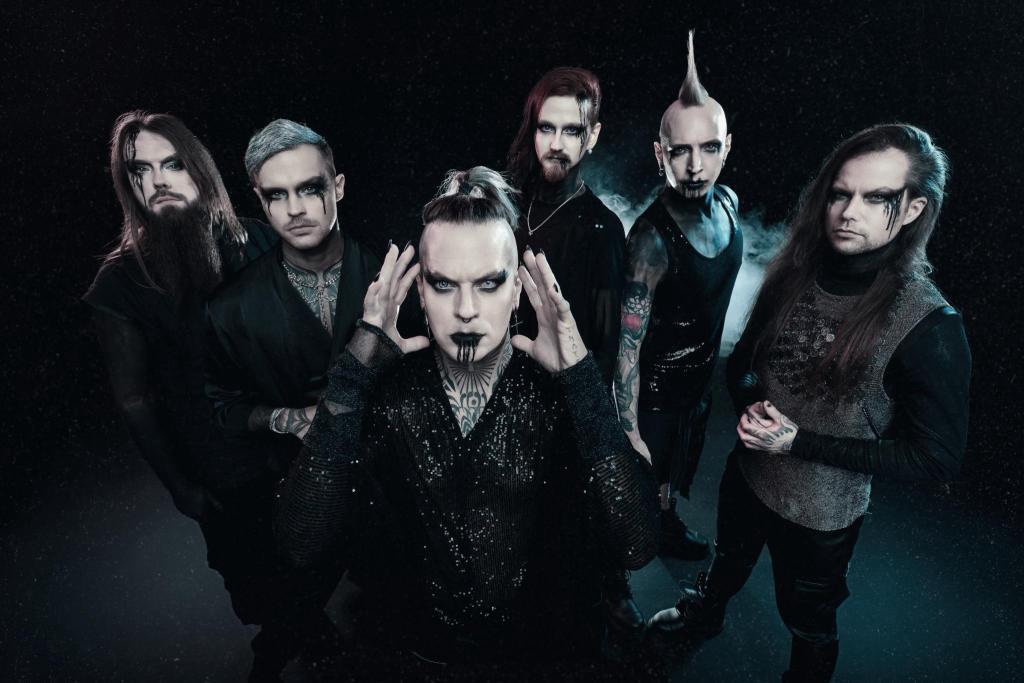
There are bands that flirt with ambition—and then there’s Lord of the Lost, who have spent the better part of this decade consumed by it. What began as a daring conceptual thread with OPVS NOIR Vol. 1 and deepened into something more immersive with Vol. 2 now reaches its final, unapologetically theatrical crescendo in OPVS NOIR Vol. 3. This isn’t just a closing chapter—it’s a dark yet beautiful reckoning. A mirror held up to everything the band has built, burned, and resurrected in blackened beauty.
From the very first moments of Kill The Lights, I felt the gravity of finality creeping in. It doesn’t rush to announce itself. Instead, it arrives—carried on the back of mournful cello lines that feel less like an intro and more like the dimming of something sacred. There’s a cinematic patience here, a willingness to let silence and space do just as much storytelling as distortion and percussion. And when the track begins to swell, it doesn’t explode, but rather it envelops. It’s the sound of a curtain slowly rising, not on a performance, but on a confrontation with everything left unsaid. That same sense of theatrical restraint echoes later in The Days Of Our Lives, creating a deliberate symmetry between beginning and end—one that makes the journey feel circular rather than linear.
That tension—between spectacle and sincerity—becomes a defining thread as I’m A Diamond bursts through the shadows with a pulse that feels almost defiant. Featuring Alea of Saltatio Mortis, the track leans into a kind of industrial-pop bravado, but there’s something deeper under the gloss. It’s not just about resilience—it’s about reclaiming identity in a world that constantly tries to dull it. The hooks are massive, undeniably so, but they’re earned. They feel like a release after the suffocating introspection of the opener, and yet, they never fully abandon the darkness that defines this trilogy. That same duality resurfaces in Take Me Far Away, where melody and longing intertwine in a similarly accessible—but emotionally layered—way, proving the band’s ability to balance immediacy with introspection.
My Funeral continues that push-and-pull in a way that only Lord of the Lost could pull off, especially when contrasted with the biting aggression of I Hate People. On paper, it reads like a contradiction—a song about death that dares to smile—but in execution, it becomes one of the album’s most quietly rebellious statements. The gothic textures are lush, almost romantic, but there’s a tongue-in-cheek undercurrent that refuses to let the track drown in its own melancholy. Wear pink to my funeral, a manifesto of sorts, is a refusal to let grief define legacy. A reminder that even in endings, there can be color—something I Hate People violently strips away before rebuilding it through confrontation instead of acceptance.
That color is immediately drained—and then violently reintroduced—with I Hate People, a snarling, industrial-tinged collaboration with Wednesday 13 that doesn’t so much invite you in as it dares you to keep up. There’s a catharsis here that feels almost dangerous, like opening a door you’ve kept locked for too long. But beneath the aggression lies something more nuanced than its title suggests. It’s not about hatred—it’s about exhaustion. About the weight of human contradiction. And in pairing Chris Harms with Wednesday 13, the track becomes a theatrical duel of perspectives, each line dripping with equal parts venom and vulnerability—an intensity that makes the introspection of The Shadows Within hit even harder by comparison.
Then comes The Shadows Within, and suddenly, everything shifts again. The aggression dissolves into something far more introspective, carried by symphonic arrangements that feel almost suffocating in their beauty. This is where the album begins to dig deeper—not outward, but inward. The shadows aren’t external forces anymore—they’re reflections. Fragments of self that refuse to be ignored. The orchestration here is stunning, but it never overshadows the emotional core. Instead, it amplifies it, turning the track into one of the album’s most haunting moments—mirroring the emotional unraveling later explored in When Did The Love Break?, but through internal conflict rather than relational collapse.
La Vie Est Hell follows, and with it comes a sense of theatrical grandeur that feels almost operatic in scope, especially when placed against the grounded vulnerability of Square One. Featuring Hannes Braun, the track leans heavily into its literary roots, drawing inspiration from Baudelaire’s Les Fleurs du mal and weaving French lyricism into its DNA. There’s a decadence here—a deliberate indulgence in darkness that feels both intellectual and visceral. It’s not just a song—it’s a performance. And yet, even in its most elaborate moments, it never loses sight of its emotional center. It’s hell, yes—but it’s a hell that’s been felt, not just imagined—something Square One translates into something quieter, more personal, and arguably more devastating.
Square One arrives like a quiet exhale after the storm, but it’s anything but a reset. If anything, it’s an acknowledgment that no matter how far you’ve come, some cycles are impossible to escape. The track carries a sense of weary acceptance, wrapped in melodies that feel deceptively simple but linger long after they fade. It’s the sound of someone standing at the edge of everything they’ve built, realizing that starting over isn’t always a choice—it’s a necessity. That same inevitability bleeds directly into Your Love Is Colder Than Death, where acceptance gives way to emotional frostbite.
That realization cuts even deeper with When Did The Love Break?, a track that explores and dissects heartbreak. Featuring Ambre Vourvahis of Xandria, the song becomes a dialogue rather than a monologue, each voice adding a new layer to the emotional unraveling. There’s a fragility here that feels almost unbearable at times, like watching something beautiful collapse in slow motion. And yet, it never feels exploitative. It feels honest. Painfully so. That honesty stands in stark contrast to the emotional numbness of Your Love Is Colder Than Death, making the transition between the two feel less like a shift and more like a descent.
And Your Love Is Colder Than Death continues that descent, stripping things back to something colder, more desolate. The title alone sets the tone, but the execution elevates it into something far more immersive. There’s a chill that runs through every note, every lyric—a sense of emotional numbness that feels almost suffocating. It’s not dramatic. It’s not explosive. It’s quietly devastating—a stark counterpoint to the yearning that defines Take Me Far Away.
And just when it feels like the album might remain in that frozen state, Take Me Far Away offers something unexpected—not quite hope, but something adjacent to it. Featuring Damien Edwards of Cats In Space, the track leans into a more melodic, almost nostalgic space, but it never fully escapes the shadows that surround it. It’s a longing—not just for escape, but for something better. Something more. And in that longing, it becomes one of the album’s most human moments—echoing the emotional accessibility of I’m A Diamond, but with a far more wistful, reflective tone.
Which brings us to The Days Of Our Lives—and what a way to close this chapter. If Kill The Lights was the curtain rising, this is the final bow. But it’s not triumphant. It’s not celebratory. It’s reflective. The track unfolds like the end credits of a film you’re not quite ready to leave, each note carrying the weight of everything that came before it. There’s a cinematic quality here that feels almost overwhelming, as if the band is deliberately pulling back to show you the full scope of what they’ve created—mirroring the restrained build of the opening while expanding its emotional payoff.
But what makes this closing moment so powerful isn’t its scale—it’s its restraint. There’s no forced resolution. No neatly tied ending. Instead, there’s a lingering question: what happens after the story ends?
And maybe that’s the point.
Because OPVS NOIR Vol. 3 isn’t just an album—it’s the final piece of a much larger narrative. One that has refused to take the easy road at every turn. One that has embraced contradiction, complexity, and emotional honesty in a way that feels increasingly rare. Across these eleven tracks, Lord of the Lost don’t just conclude a trilogy—they transform it. They take everything that made the first two volumes compelling and push it further, deeper, darker.
This is easily the most unpredictable entry in the trilogy, but it’s also the most complete. It doesn’t rely on the groundwork laid before it—it builds on it, challenges it, and ultimately transcends it. The blending of heavy guitars, dark electronica, and orchestral elements feels more seamless than ever, not because it’s polished, but because it’s purposeful. Every choice feels intentional. Every shift in tone feels earned.
And perhaps most importantly, every moment feels human.
In a genre that often leans heavily on aesthetic, Lord of the Lost continue to prove that substance and style don’t have to exist in opposition. They coexist. They elevate each other. And with OPVS NOIR Vol. 3, they become something undeniable—ambition refined into necessity.
And in that necessity, Lord of the Lost don’t just complete a trilogy—they carve out something that refuses to fade once the final note disappears.
Verdict: 4.8/5
 Ethereal Metal
Leave a comment