Ryan Murray | Co-Owner | Chief Editor | Contributor | Photographer
r.m.music84@gmail.com

There are concerts, and then there are experiences—nights so immersive, so grand in their execution, that they feel less like live performances and more like events ripped from the fabric of time itself. Dream Theater’s 40th Anniversary tour stop at Wallingford CT’s Toyota Oakdale Theater was one such night: a breathtaking, theatrical odyssey spanning decades of musical brilliance, technical wizardry, and a visual spectacle that transported the audience into an entirely different realm.
The band, titans of progressive metal, needed no opener—this night was purely theirs. A two-act performance, punctuated by an encore of monumental proportions, painted an unparalleled picture of Dream Theater’s past, present, and future. But what truly made this night unforgettable was the return of Mike Portnoy behind the drum kit. The man who co-founded Dream Theater, who shaped their unmistakable rhythmic identity, was back, and from the very first thunderous drum fill, it was as if no time had passed. The chemistry, the energy, the sheer power—this was a reunion that didn’t just live up to expectations; it shattered them.
The moment the lights dimmed, an anticipatory silence fell over the venue, quickly shattered by the unmistakable opening riff of Metropolis Pt. 1: The Miracle and the Sleeper. It was the perfect opener—not just for its legendary status among fans, but for the sheer statement it made. Dream Theater was here to remind everyone why they are the undisputed kings of progressive metal. John Petrucci’s fingers danced across the fretboard, Jordan Rudess’ keyboards soared through the air, and James LaBrie’s vocals carried that distinct blend of theatricality and power. But perhaps the most electrifying element? Mike Portnoy’s drumming. From the first snare hit, it was clear—his signature groove, his unmistakable fills, his feel—it was all back, like he had never left.
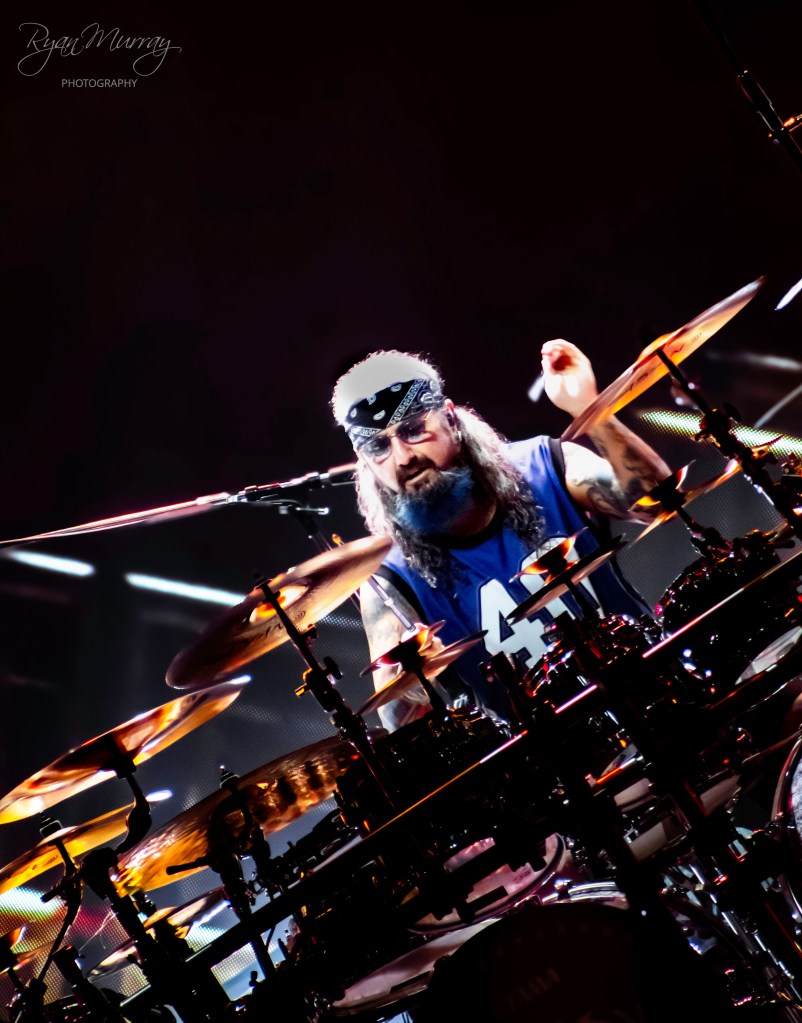
Without pause, the band launched into Act I: Scene Two: Overture 1928, a seamless, cinematic transition that felt less like a song and more like a portal pulling the audience deeper into Dream Theater’s vast sonic universe. Portnoy’s precision was on full display, his dynamic control making every cymbal swell and tom roll feel like part of an unfolding narrative. The segue into Strange Déjà Vu was effortless, keeping the momentum flowing while the stage visuals painted dreamlike imagery to match the song’s hypnotic, almost surreal quality. LaBrie, ever the showman, commanded the stage with confidence, his voice soaring above the complex instrumentation, engaging the crowd with theatrical flourishes that made every lyric feel like a piece of the unfolding story.
Then came the first true sledgehammer of the night—The Mirror. The song’s crushing, down-tuned riffage hit like a monolithic wall of sound, and Portnoy’s return made it even more ferocious. His relentless attack on the drums—flawless double bass runs, cymbal crashes timed to perfection, those unmistakable snare accents—proved why his presence behind the kit had been so sorely missed. Just as the audience braced themselves for its conclusion, the band delivered a surprise transition into the Lie solo outro, igniting a frenzy of excitement as Petrucci shredded with surgical precision.

The mood shifted again as Barstool Warrior introduced a melodic reprieve, offering a moment of introspection amidst the technical fireworks. The interplay between Petrucci and Rudess was especially mesmerizing, their solos weaving together like an intricate dance. Fans swayed to the song’s uplifting melody, a testament to the emotional depth Dream Theater brings to even their most intricate compositions.
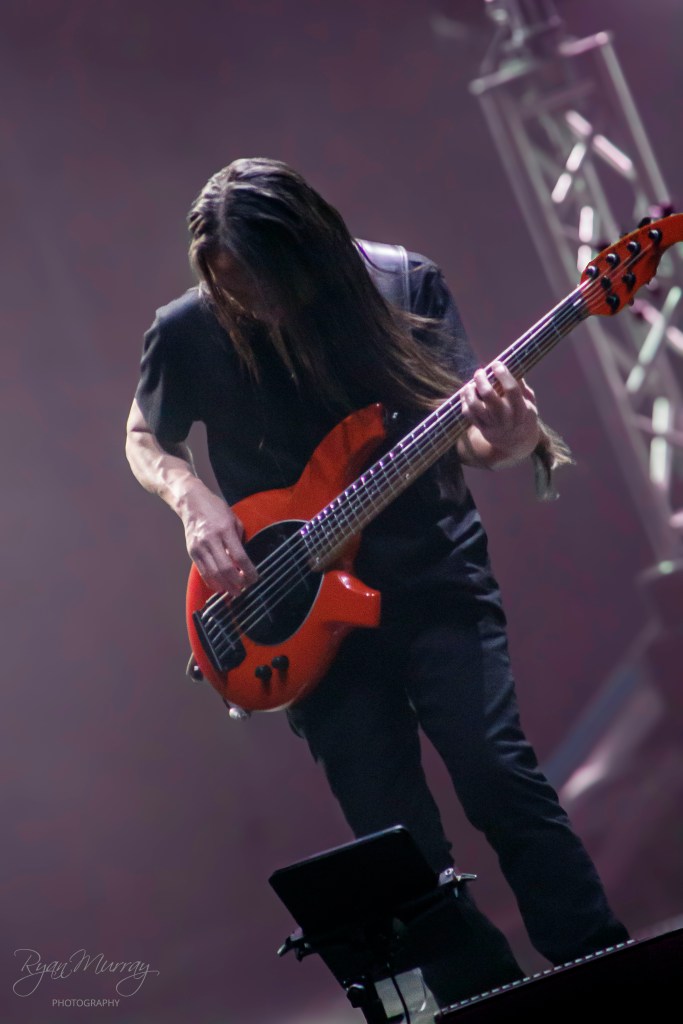
Then came a pivotal moment in the set—A Rite of Passage, a track that pulsed with a sense of urgency and mystique. The band’s chemistry was on full display, the rhythm section of John Myung and Portnoy locking in like they had never been apart, while Petrucci’s solos cascaded through the air like fire. LaBrie’s voice carried the song’s ominous message with commanding authority, drawing the crowd deeper into its world.
Yet the true gem of the first act arrived with Hollow Years—not just any version, but the 1996 demo version, a rarity that sent waves of excitement through the die-hard fans in attendance. Stripped down and brimming with raw emotion, it showcased a different side of Dream Theater’s songwriting evolution. The atmosphere was electric, as if the entire venue was holding its breath, captivated by this glimpse into an alternate timeline of the band’s history. Every note felt personal, every lyric carrying a deeper resonance, making it one of the most unforgettable moments of the night.

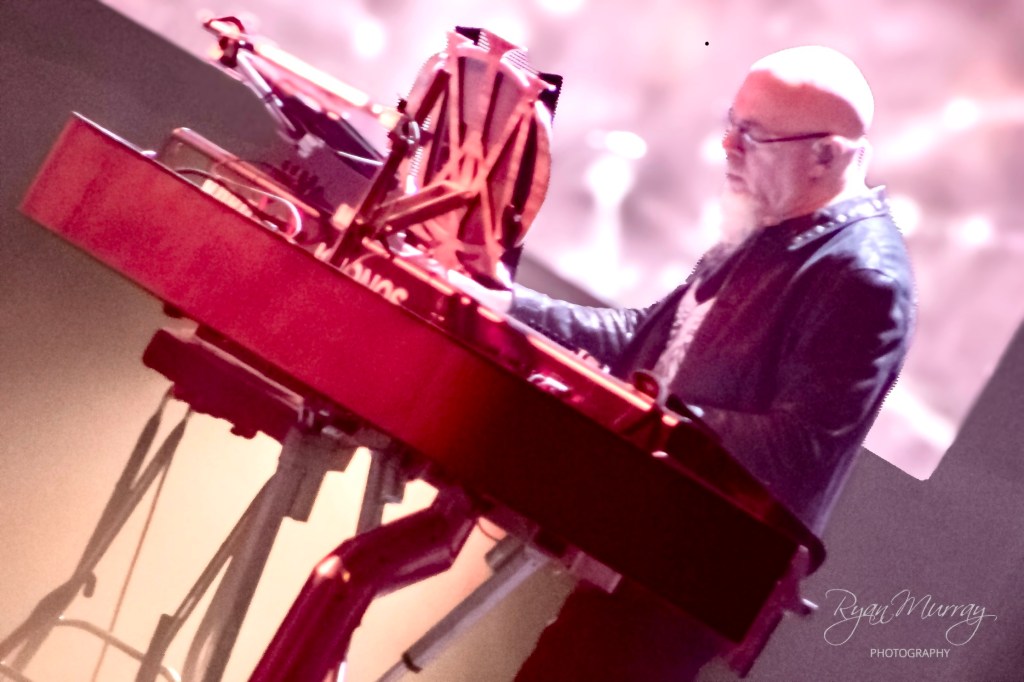
Dream Theater then reignited the fire with Constant Motion, an absolute juggernaut of technicality and aggression. The song’s relentless energy had the audience headbanging in unison, while Rudess’ lightning-fast keyboard runs and Petrucci’s machine-gun riffing left jaws on the floor. Following that intensity, As I Am delivered a crushing, no-frills finale to Act I, its defiant chorus sending the crowd into a frenzy. The song’s powerful outro left a lasting impression, a final exclamation mark on an act that had already solidified itself as a masterclass in live performance.
As the band exited the stage for intermission, there was a collective realization in the air—this was only halfway through the night, and yet Dream Theater had already taken the audience on an odyssey that most bands would struggle to achieve in an entire tour.
If Act I was a celebration of the band’s progressive metal prowess, Act II’s intro was a love letter to their symphonic and cinematic ambitions. The transition was marked by one of the most awe-inspiring moments of the night: an orchestral overture, a masterfully arranged medley spanning every Dream Theater album, created by Joseph Stevenson. This wasn’t just a nostalgic callback—it was an epic, larger-than-life retelling of the band’s musical history through sweeping orchestration and layered textures that built upon each other with breathtaking precision. It was a testament to Dream Theater’s grandeur, a moment where the band’s sonic world expanded beyond itself, swallowing the venue whole. But the magic didn’t stop there. The visuals—crafted by the genius of Wayne Joyner—were nothing short of mesmerizing. A kaleidoscope of dreamlike landscapes, surreal imagery, and thematic callbacks transformed the stage into something beyond a mere concert venue. It was an experience, a journey through both sound and vision that elevated the performance to a level few bands could ever reach.
Then came Night Terror, a track from their latest album Parasomnia, making its live debut with a haunting intensity. Dark, immersive, and unpredictable, it fit seamlessly into Dream Theater’s pantheon, proving that even after 40 years, they still push boundaries. Midnight Messiah followed, its soaring melodies providing a perfect counterbalance before the band dipped into the melancholic beauty of This Is the Life and the aching sorrow of Vacant.

The instrumental juggernaut Stream of Consciousness provided an electrifying moment of pure technical brilliance—no words needed, just four musicians at the absolute peak of their craft, feeding off one another’s energy in an exhilarating display of skill and emotion. And then, the moment that defined the night: Octavarium.
To say that Octavarium was “performed” would be an understatement—it was experienced. The 24-minute opus, a fan-favorite and a pinnacle of progressive rock storytelling, unfolded like an epic saga. It started as a whisper, built into a storm, and finally erupted into a triumphant climax that left the audience breathless. The closing notes hung in the air, a moment of collective awe washing over the crowd. This was why people came. This was why Dream Theater stood as legends.
The night could have ended there, and no one would have left unsatisfied. But Dream Theater had one final act in store, a three-song encore that felt less like an epilogue and more like a grand finale written in the stars. The opening notes of Act II: Scene Six: Home sent a shockwave through the audience, its brooding mystique and explosive energy pulling everyone into a final whirlwind of sound. The atmosphere was electric—Petrucci’s searing leads, Myung’s hypnotic basslines, and Portnoy’s thunderous groove coalesced into something almost transcendent. The song built to a fever pitch, each passage more intense than the last, before dissolving into the solemn opening of Act II: Scene Eight: The Spirit Carries On.
A hush fell over the crowd as LaBrie’s voice took center stage, rich with emotion, delivering the song’s poignant message with the weight of a thousand memories. The entire theater became a choir, thousands of voices rising in unison to sing, “If I die tomorrow, I’d be all right, because I believe that after we’re gone, the spirit carries on.” It was a moment frozen in time, a shared catharsis between band and fans, a testament to the journey Dream Theater had taken them on—not just that night, but across four decades of music that had shaped lives and defined an era. And then, as if to bring it all full circle, the unmistakable opening riff of Pull Me Under erupted like a final explosion of pure, unfiltered nostalgia. The song that had introduced the world to Dream Theater, the song that started it all, was now the final exclamation point on an already legendary night.
Dream Theater’s 40th Anniversary Tour wasn’t just a concert—it was a reckoning, a resurrection, a rebirth. It was history in motion, a band at the height of their power proving that time has only sharpened their craft. And at the center of it all, Mike Portnoy, back where he belongs. Not just as a drummer, but as a heartbeat, a force, a legend reunited with the band he helped build. As the final notes rang out and the stage lights faded, one truth became clear—this wasn’t just a celebration of 40 years. It was the beginning of something even greater.




 Ethereal Metal
Leave a reply to Michael Gunner Cancel reply