Ryan Murray | Co-Owner | Chief Editor | Contributor | Photographer
r.m.music84@gmail.com
Some music doesn’t just play — it remembers. It doesn’t begin with a note, but with a flicker: the soft hiss of a candle lighting the way back to places you’ve never been, yet somehow always known.
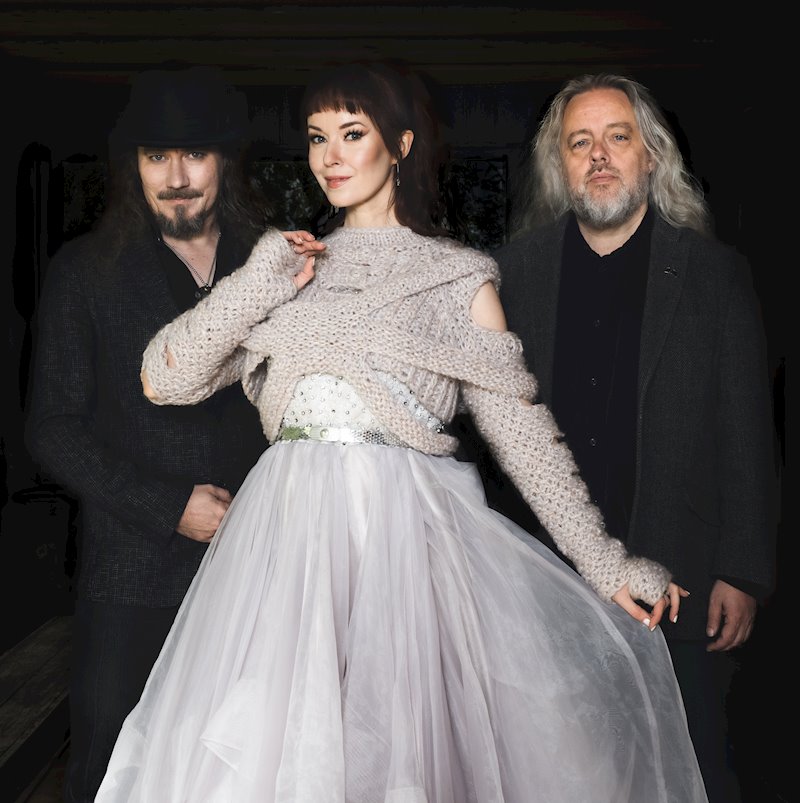
With AURI III: Candles and Beginnings, the Finnish modern folk trio Johanna Kurkela, Tuomas Holopainen, and Troy Donockley continue their mystic voyage across the liminal spaces between dreams, hope, and memory. This isn’t merely a third album. It’s the third chapter in a story that exists outside of time, a lantern-lit path through the mist where folk meets fantasy, and every step is one toward something ancient and new all at once.
There is a hush that surrounds Auri—an intimacy, a gentleness, as though the music was composed not with instruments, but with the soft exhale of spirits communing. Kurkela’s voice, so pure it seems to hum from the veins of the earth itself—guides us again, not forward, but inward. On this album, that introspection deepens. As the trio told me, they often feel like vessels, not entirely sure where the songs come from, only that they’re meant to follow them—like rivers chasing a moonlit tide.
Opening with the delicate shimmer of The Invisible Gossamer Bridge, the record instantly draws you into that suspended world Auri inhabit so effortlessly. But as with all magic, the bridge must first be found—hidden in plain sight, waiting for those still attuned to wonder. To cross it is to enter a realm where memory and myth walk hand in hand. It’s not long before the album touches more spectral ground, where sweeping and spellbinding melodies give way to more haunting textures. The Apparition Speaks and Oh Lovely Oddities offer some of the album’s most quietly arresting moments—ethereal, at times eerie, but never cold. There’s warmth in the mystery, a sense of something sacred being softly revealed.
The emotional thread runs deep across each piece. I Will Have Language unfurls like a mysterious, deeply personal vow, grounded yet fragile in its beauty, while Libraries of Love flows with timeless elegance, drenched in memory without drowning in it. These songs don’t demand attention, they gather it.
There’s a more grounded sensibility at the heart of Blakey Ridge, named after the band’s beloved Lion Inn atop the North York Moors, and it moves with a steadiness that feels like homecoming. The atmosphere surrounding Blakey Ridge—and within the weathered stone walls of The Lion Inn itself, a 16th-century refuge nestled against the wild expanse—lends itself to reflection, inspiration, and warmth. It’s a place where time softens, where stories settle into the floorboards, and where music like this feels inevitable, as if it were always meant to echo from those hills. Helios, on the other hand, lets light in—its movement unhurried, open-hearted, and warm. It carries a quiet optimism, gradually unfolding with a sense of clarity and peace that uplifts without ever rushing.
And then comes Museum of Childhood, not in a hush, but with a lively glint in its eye. One of the more playful and near-jubilant tracks on the album, it radiates childlike joy and wonder, evoking a space where early memories live on unfiltered by time. During our conversation, each band member shared what they would place in such a museum, offering glimpses into their most personal memories—cherished fragments of childhood that still shape the way they create today. You can hear those reflections in the full interview below. The track captures that spirit perfectly: gleaming, imaginative, and emotionally resonant without ever becoming sentimental.
That same balance of strength and softness echoes in Shieldmaiden, which carries itself with quiet dignity. It stands firmly, offering power not through volume, but presence. And finally, A Boy Travelling With His Mother closes the journey with tenderness and reflection—a farewell of sorts, but not a sorrowful one. It feels like a final moment shared before stepping into something new.
This is not music for background listening. It’s not music you consume; it’s music you inhabit. The production—mixed under the Andalusian sun by longtime engineer Tero Kinnunen and mastered at Peter Gabriel’s Real World Studios—breathes with life, layering strings from Frank Van Essen, cello work from Jonas Pap, and Kurkela’s own enchanting, lush, and warm violins with the subtle, sensitive percussion of Nightwish’s Kai Hahto. Every detail feels handcrafted. Every sound, a brushstroke in a larger painting only the soul can fully see.
Auri III: Candles and Beginnings doesn’t shout to be heard, it doesn’t have to. It speaks in quiet, luminous tones, and somehow feels larger than life because of it. It invites you to sit, to listen, to remember. To believe that there are still places within us untouched by the modern world’s harshness. That there are still bridges—gossamer, yes, but real—between now and forever.
In a time when the world feels increasingly chaotic and fragmented, Auri offer something simple, beautiful, and brave: a beginning.
And a candle. 🕯️
VERDICT: 4.5/5


 Ethereal Metal
Leave a reply to jilu avaruus Cancel reply