Ryan Murray | Co-Owner | Chief Editor | Contributor | Photographer
r.m.music84@gmail.com
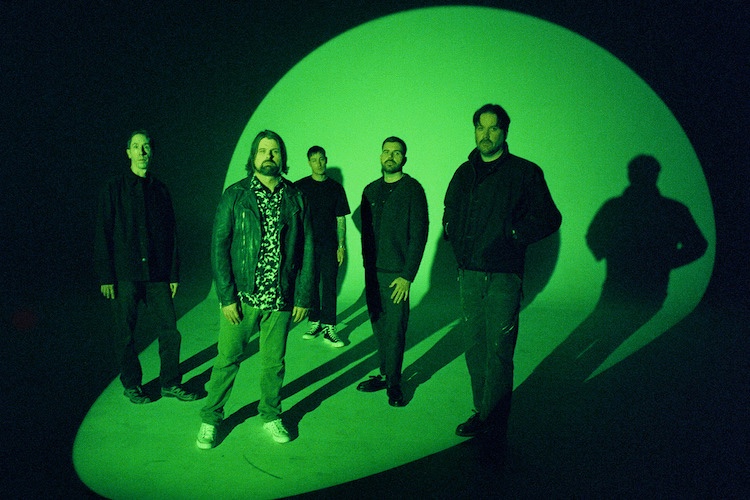
Silverstein have always carried a restless hunger. Across two decades and countless reinventions, they’ve never been content to sit inside a neat box of “post-hardcore” or “emo veterans.” Instead, they’ve evolved in real time, their music reflecting both the anxieties and hopes of an era that constantly threatens to swallow authenticity whole. Pink Moon, the second half of their ambitious double album following this year’s Antibloom, feels less like a companion piece and more like the deep exhale after a storm. It sharpens Silverstein’s teeth while allowing their vulnerabilities to bleed openly. Where Antibloom channeled chaos and jagged edges, Pink Moon is a statement of clarity, resistance, and survival.
The opening cut, I Love You But I Have To Let You Go, sets the tone for this duality. It is restrained yet trembling with urgency, pulling listeners into an atmosphere both cinematic and raw. Rather than blasting out of the gate, Silverstein craft tension, allowing Shane Told’s voice to hover between intimacy and eruption. It mirrors the desert winds of Joshua Tree where the record was born: calm one moment, violent the next. Sequenced deliberately, this introduction marks the band’s commitment not to repetition, but to contrast.
That sense of contrast becomes a defining thread through Pink Moon. Negative Space crashes through the stillness, unspooling jagged riffs and rhythmic pulls that feel claustrophobic yet exhilarating. It is as though the band have weaponized silence itself, turning absence into a presence that hangs heavy over every chord. This is not just another Silverstein song. It is a reminder that emptiness is never neutral; it is something you can feel pressing against your chest.
Then comes Drain The Blood (featuring Rory Rodriguez of Dayseeker), the record’s blistering centerpiece and one of the most provocative songs of their career. Born from guitarist Paul Marc Rousseau’s first day in the studio, a song he refused to abandon, it doubles as manifesto: “keep your AI out of my art.” In an era where technology increasingly blurs human expression, Silverstein draw a hard line in the sand. The song is volatile, erratic, and proudly human, deliberately making choices an algorithm never would. When Rory bursts in with “Can I be honest now? I don’t see a way we get beyond this hell,” it feels like a rupture in the fabric of the track. His voice is weary but defiant, embodying the futility and necessity of resisting automation. This is not just collaboration; it is confrontation.
But Silverstein never stay in one mode for long. The Fatalist and Widowmaker form a devastating one-two punch that drives the album deeper into personal reckoning. The former twists existential despair into a furious sprint, every riff a refusal to lie down quietly. The latter lingers in the aftermath, grief and venom bleeding into one another, Told’s delivery balancing rage with desolation. Across both tracks, you hear the dualities at the heart of Pink Moon: death and renewal, love and abandonment, human fallibility and the will to endure.
It is no accident that this album carries the only guest appearances of the double record. Where Antibloom was insular, Pink Moon opens the gates. Alongside Rodriguez, Silverstein enlist Cassadee Pope on Autopilot. On paper, the move might raise eyebrows, but in execution it soars. Her voice threads through the song with both fragility and strength, a reminder that melody can wound as deeply as distortion. The duet blurs genre walls, pulling Silverstein into unfamiliar, yet exhilarating territory. It is one of the most daring cuts on the record, and its placement mid-album gives Pink Moon its turning point.
From there, the descent grows darker. Death Hold claws at mortality with suffocating urgency, guitars circling like vultures while the vocals cut with venom and vulnerability. The band sound utterly unchained here, locked into a storm that feels as if it might collapse under its own weight, but never does. And then comes Dying Game, the closer, a track that distills the album’s contradictions into one searing farewell. Equal parts elegy and battle cry, it asks what it means to survive not just twenty years as a band, but twenty years as artists who refuse to repeat themselves. It does not end in neat resolution. It ends in confrontation, daring the listener to keep walking into the desert night.
Taken as a whole, Pink Moon does not play like an epilogue. It plays like ascension. Sequenced with precision, it refuses to offer comfort without consequence. Where Antibloom cracked open the door, Pink Moon rips it from its hinges, daring both the band and their audience to step through. The deliberate choice to split these works into two halves was not just practical. It was visionary. Each half carries its own weight, but together they form something larger, a tidal cycle of collapse and renewal.
Silverstein have spent two decades outlasting trends, but what makes Pink Moon remarkable is how unafraid it is to sound current. The incorporation of guests, the engagement with modern fears like AI, the willingness to lean into melody without abandoning bite, all of it speaks to a band refusing to fossilize. Yet at its core, the record still bleeds the same human desperation that defined their earliest work. That is the paradox Silverstein have mastered: their music evolves, but their humanity does not waver.
Pink Moon is an album of thresholds: between chaos and order, grief and resilience, humanity and machine. It stands as a reminder that Silverstein are not simply survivors of their scene; they are architects of its future. And if Antibloom was the crack of dawn, Pink Moon is the moment night and day collide, blinding, terrifying, and impossibly beautiful.
Verdict: 4.5/5.0

 Ethereal Metal
Leave a comment