Ryan Murray | Co-Owner | Chief Editor | Contributor | Photographer
r.m.music84@gmail.com

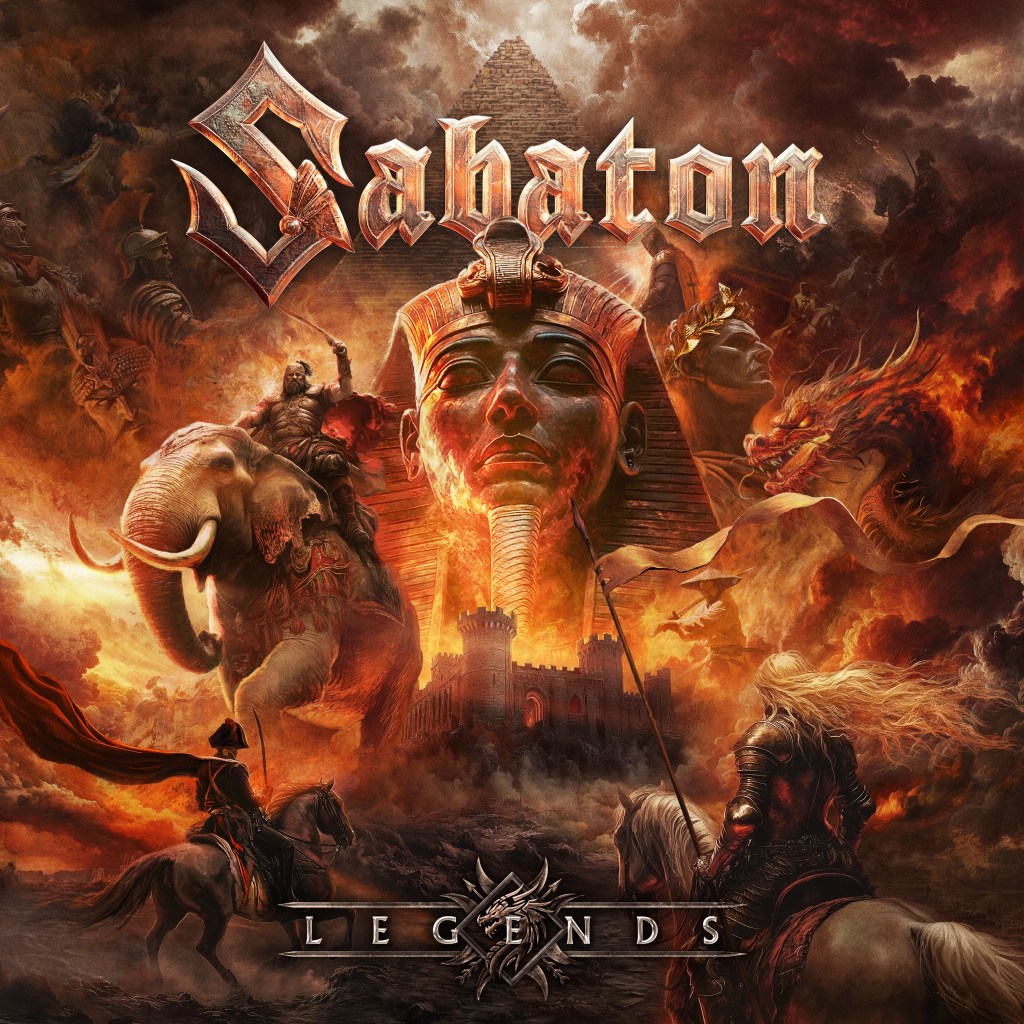
Sabaton’s Legends arrives as their first full-length album with Better Noise Music, marking not just a new chapter in their career but a deliberate step into a larger, more cinematic soundscape. This partnership signals ambition: new label, new resources, new reach, but Sabaton remains unmistakably themselves, commanding the listener with the same martial intensity and historical storytelling that has defined their career. With Legends, they embrace the opportunity to expand their scope, exploring eras and figures far beyond their previous focus on 20th-century battlefields, and proving that even after a decade of albums, they still have stories to tell and legends to forge.
From the first notes of Templars, you’re plunged into a world where steel meets story, where every drum hit and guitar gallop carries the weight of empires and the whisper of long-buried legends. The album wastes no time asserting itself. It’s a declaration that Sabaton is not just recounting history, they are inhabiting it, channeling it through layers of choir, orchestration, and sheer unrelenting metal.
The opening surge of Templars feels monumental: the guitars cut like sharpened banners, the drums march like an army on the horizon, and Brodén’s voice carries both command and reverence. There’s a clarity in the chaos here — a sense that these aren’t just battles being sung of, but entire worlds being conjured. That energy flows seamlessly into Hordes of Khan, where the galloping riffs and ferocious rhythms conjure the vast steppes of Mongolia. The song rides forward with kinetic force, almost cinematic in its momentum, painting the Mongol hordes as an unstoppable storm, each note hammering the tension between history and legend.
Then A Tiger Among Dragons lands like a thunderbolt. Lü Bu’s story unfolds not just in words, but in every swell and choir-laden crescendo. The tribal heartbeat of Van Dahl’s drums sets the stage, then the guitars rise, swelling into a chorus that feels larger than life. Brodén’s delivery here is both commanding and emotive, capturing Lü Bu’s fearsome prowess while hinting at the isolation that comes with such legendary might. The track doesn’t just soar; it roars, and for anyone listening, it becomes immediately clear that this is the album’s apex. A moment where Sabaton’s ambition meets their fullest expression of cinematic metal.
From there, the album shifts seamlessly westward. Crossing the Rubicon holds the tension of history in a tight, disciplined march, each note echoing Caesar’s audacious gamble. The galloping energy persists, yet the song feels measured, reflective of the calculated risk that history remembers. That tension explodes in I, Emperor, where Napoleon’s ambitions come alive through a chorus that is equal parts majestic and relentless. The track is punchy, commanding, and undeniably catchy, balancing orchestral depth with the kind of riff-driven energy that makes Sabaton such a unique presence in power metal. The board-game style imagery of the music video underscores the playful genius of the song, but the music itself remains grounded in historical gravity with Napoleon’s cunning and ambition encoded in every beat.
In contrast, Maid of Steel and Impaler bring different textures to the album. Joan of Arc’s tale in Maid of Steel is ferocious yet spiritual, her resolve carried by slashing guitars and staccato drum hits. The song strikes a careful balance between storytelling and adrenaline, reminding listeners that heroism is both a personal and public battlefield. Impaler, exploring Vlad III, dives darker, heavier, and more brutal. The guitar tones are menacing, the chorus a relentless hammering of fate and ferocity. Here, Sabaton does not soften history; they embrace its darkness, yet the track sits slightly in the shadow of A Tiger Among Dragons — formidable, but less expansive.
Lightning at the Gates and The Duelist push the album into strategic brilliance. Hannibal’s crossing of the Alps in Lightning at the Gates captures tension, patience, and fury in measured waves, while The Duelist brings Musashi’s disciplined ferocity to the fore. The guitars gallop with the precision of a drawn katana, each drumbeat like a strike of inevitability. These tracks are fast, thrilling, and clever, showcasing that Sabaton can still surprise even within their well-established formula. They maintain the narrative drive while letting the music breathe, with both storytelling and technical prowess in perfect tandem.
As The Cycle of Songs and Till Seger close the album, the pace softens, not in retreat, but in reflection. Senusret III and Gustav II Adolf are cast not as immediate warriors on the battlefield, but as figures whose influence lingers across centuries. Choirs return, not to herald battle, but to commemorate legacy; guitars swell and fade like history itself — majestic, enduring, haunting. In these final moments, Legends reminds listeners that metal can be contemplative as well as explosive, that power need not always scream to command attention.
What emerges across these eleven tracks is a careful balancing act between grandeur and intimacy, spectacle and storytelling. Sabaton never abandons the core of their sound. The galloping riffs, martial drums, and soaring choruses remain steadfast, yet within that familiar framework they push further, exploring texture, pacing, and orchestration with ambition that outshines much of their previous work. Choirs swell, solos sing and duel, and percussion surges in ways that make each track feel alive and distinct. While some songs, like Impaler, lean closer to familiar terrain, the album’s highlights, like A Tiger Among Dragons, I, Emperor, and The Duelist, show the band at their cinematic peak, where metal meets history and both are elevated to legend.
Lyrically, Sabaton continues to excel at infusing historical fact with emotive resonance. Lines from A Tiger Among Dragons, “Allies have no allies / Foes come and go / And my legend will grow”, encapsulate both the personal and mythic scale of the album. In I, Emperor, the ambitious thrust of Napoleon’s vision is mirrored in the music’s unstoppable forward momentum. Even without exhaustive knowledge of each historical figure, the songs communicate their stories with clarity, intensity, and humanity. Sabaton does not simply narrate; they embody, and in doing so, create an experience that feels as immediate as it is timeless.
The production across Legends deserves note as well. Each instrument occupies its own space while contributing to the larger orchestral sweep. Choirs are layered without overwhelming, guitars retain their edge even amid cinematic swells, and drums maintain a martial precision that drives the album forward. The sound is simultaneously polished and visceral, cinematic yet grounded — a reflection of Sabaton’s commitment to delivering metal that is both grandiose and unrelenting.
Ultimately, Legends is Sabaton at their most commanding and alive. From the thunderous charge of Templars to the soaring fury of A Tiger Among Dragons and the strategic brilliance of The Duelist, the album fuses history and metal with cinematic precision. Sabaton doesn’t just tell stories, they make them legendary, and Legends is a testament to their enduring power, ambition, and vision.
Verdict: 4.5/5.0
 Ethereal Metal
Leave a comment