Ryan Murray | Co-Owner | Chief Editor | Contributor | Photographer
r.m.music84@gmail.com
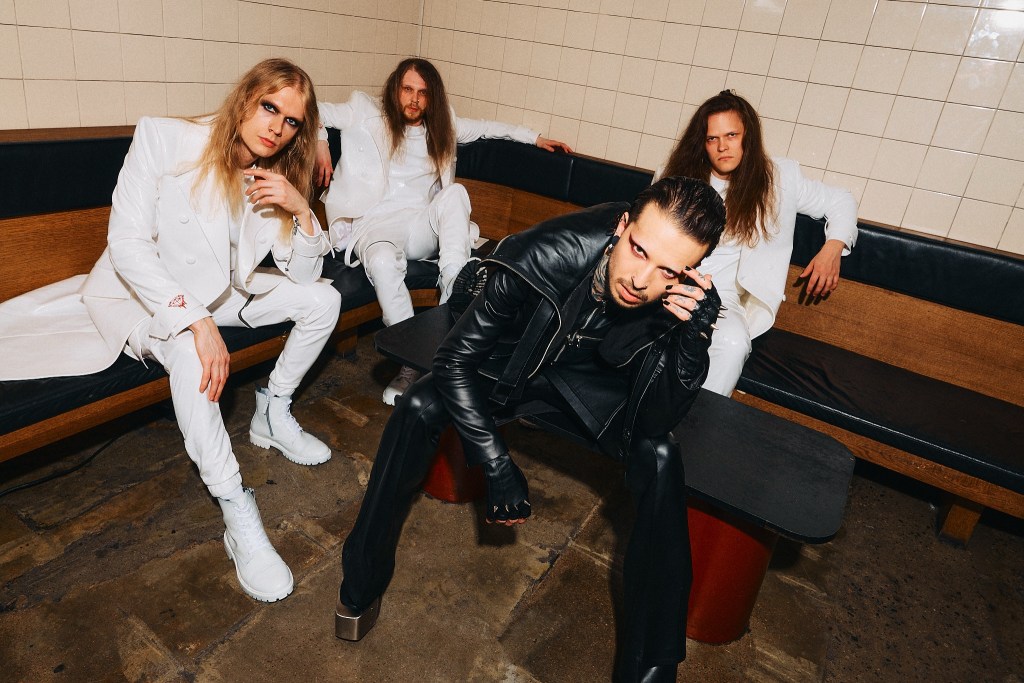
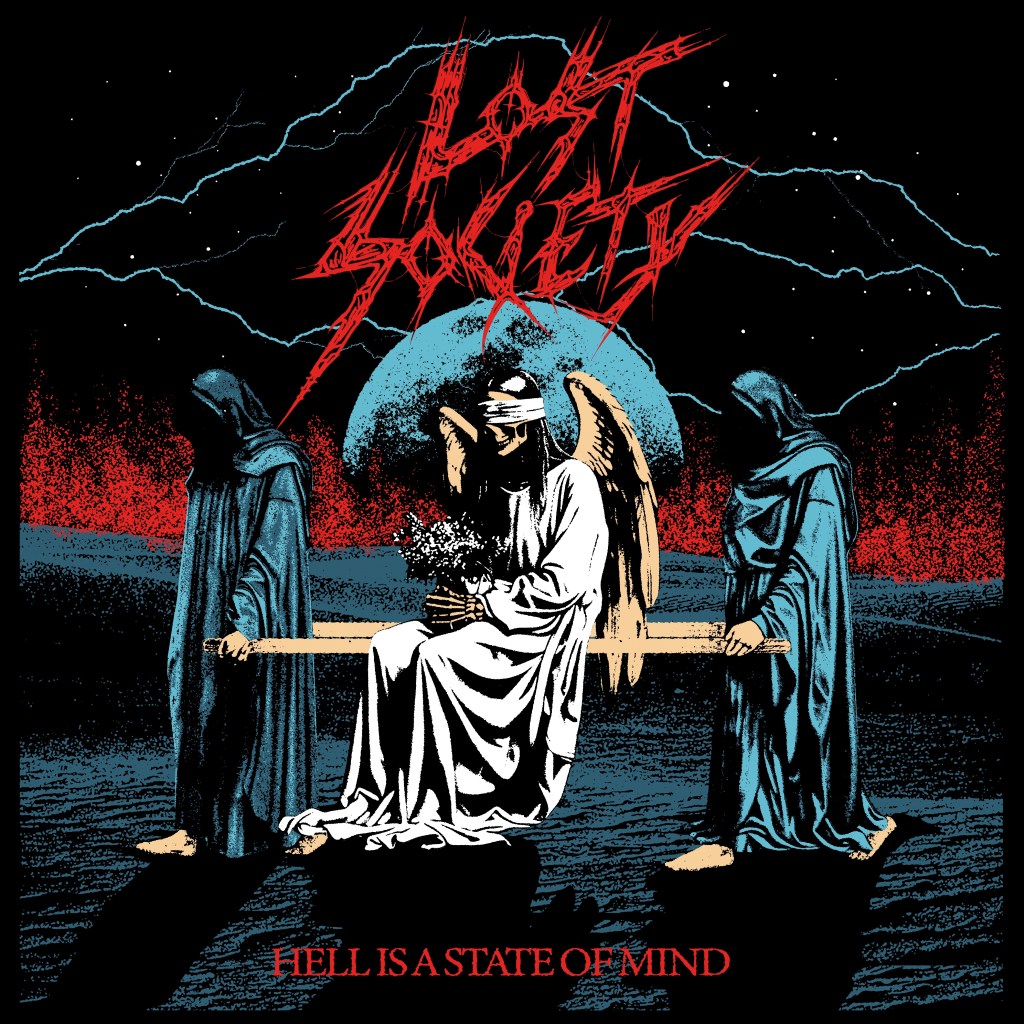
Four years after the critically acclaimed If the Sky Came Down, Finland’s metal visionaries Lost Society return with Hell Is a State of Mind, a record that doesn’t just announce their presence—it claims it. From vocalist–guitarist Samy Elbanna, guitarist Arttu Lesonen, bassist Mirko Lehtinen, and drummer Tapani Fagerström, this album emerges as their boldest statement yet: unrestrained, unmistakable, and unapologetically their own. Right from the opening notes of Afterlife, it’s clear that this isn’t a record trying to fit a mold or nod to past trends. This is modern metal that refuses comparison, cinematic and visceral, theatrical and aggressive, sprawling yet precise.
The spirit of the Finnish metal lineage looms large. “Our Finnish forebears—HIM, Nightwish, Children of Bodom—pushed heavy metal forward by doing what others wouldn’t or couldn’t. We share that ethos,” Samy notes. And this ethos is evident from the very first track. Afterlife opens the album with a slow-burn tension that quickly escalates into galloping riffs and Samy’s dynamic vocal shifts, immediately setting the stage for the journey ahead. It’s aggressive, theatrical, and deeply narrative—the perfect overture for an album that charts death, rebirth, and liberation.
Blood Diamond follows, a song whose cinematic sweep began as a melody sketched over a hip-hop beat before strings transformed it into full orchestral grandeur. Dramatic and intoxicating, the track showcases Lost Society’s ability to fuse classic metal aggression with sweeping, emotional arrangements. From the soaring leads to the tension-filled orchestral moments, it establishes the album’s DNA: a collision of raw metal spirit and the grandeur of theater. Synthetic continues this energy, blending mechanized rhythms with melodic riffs and hints of the experimental tendencies that Lost Society have embraced throughout the record. Together, these tracks reveal a band fully comfortable with pushing boundaries while remaining grounded in metal’s core intensity.
One of the album’s emotional highlights is Is This What You Wanted, which strips the band to their essence. Beginning with sweeping strings and acoustic guitars, the track builds gradually, giving Samy room to stretch into falsettos, screams, and whispered cadences. It’s delicate yet emotionally devastating, perfectly juxtaposed against the relentless fury of L’appel Du Vide, which explores darker, more introspective territory, blending ethereal melodies with brooding riffs. Both tracks demonstrate Lost Society’s mastery of pacing, emotional contrast, and songcraft: one whispers, the other roars, and both linger in the listener’s mind long after they end.
Kill the Light follows, a fist-clenched homage to metal fury, exploding with classic-metal bravado and an unexpectedly melodic, almost playful chorus with massive sweeping strings. Paired with the preceding tracks, it exemplifies the album’s ability to pivot seamlessly between restraint and aggression. The sequence reinforces the narrative momentum: from existential reflection to outward defiance, Lost Society guides listeners through a fully realized emotional landscape.
Structural innovation is a hallmark of this album, most notably in the so-called “C-section” approach—miniature song sections within songs that add depth and surprise. No Longer Human exemplifies this technique, breaking into a glorious midsection that feels almost like a separate composition, yet integrates perfectly into the track’s narrative arc. It’s a clever and daring approach, ensuring that every song has layers to discover, even after repeated listens. Vocally, Samy pushes himself further than ever before, blending angelic falsettos, demonic screams, spoken-word cadences, and even rap-like delivery. Across the album, these dynamic shifts never feel forced—they are dictated by emotion and narrative need, adding texture to songs like No Longer Human and Is This What You Wanted.
The second half of the album continues this intricate balancing act. Dead People Scare Me (But the Living Make Me Sick) unleashes full-scale aggression, juxtaposing ferocious riffs with unpredictable rhythmic twists. Its thematic exploration of social decay and personal disillusionment mirrors the album’s broader narrative of struggle and reckoning. Personal Judas follows, expanding on these themes with sophisticated melody lines, galloping rhythms, and emotional heft, demonstrating that Lost Society can merge narrative complexity with headbanging impact without compromise.
Every song leads naturally into the next, culminating in the final, self-titled track, Hell Is a State of Mind. Written partly while Samy was battling a 39-degree fever, it’s a tempest of metal, orchestral grandeur, and unexpected stylistic turns. Abrupt scene changes, galloping passages, sweeping strings, pop-inflected choruses, and even black-metal descents coalesce into something larger than the sum of its parts. This track, more than any other, showcases the band’s willingness to take risks, embrace complexity, and rewrite their own rules in the pursuit of emotional impact.
Production elevates the album beyond mere songwriting brilliance. Reuniting with producer, co-writer, and mixing engineer Joonas Parkkonen, Lost Society crafted a sound that’s both organic and cinematic. Tracked at Finnvox Studio B with an arsenal of 25 amp heads, 10 cabinets, and classic drum kits, the guitars resonate with depth, the drums feel alive, and the orchestral components integrate seamlessly without overwhelming the core metal identity. The 40-piece Babelsberg Film Orchestra injects cinematic fire into tracks like Blood Diamond, No Longer Human, and the title track, amplifying emotion while preserving the visceral impact of the band’s performance. This meticulous attention to texture and layering ensures that every listen uncovers new details and dimensions.
The orchestral integration is particularly impressive because it never feels ornamental. Instead, strings, cinematic flourishes, and subtle arrangements enhance the songs’ dynamics and emotion. In tracks like L’appel Du Vide and Kill the Light, the orchestra provides counterpoint and tension, intensifying the narrative without overshadowing the metal core. Similarly, the album’s softer moments, particularly on Is This What You Wanted, aren’t merely for contrast—they carry weight, serving as emotional anchors that make the heavier sections feel earned and more impactful.
Thematically, Hell Is a State of Mind tracks a protagonist’s journey through death, self-destruction, societal cruelty, and ultimate revelation. Each song contributes to this arc, creating a cinematic narrative that moves effortlessly between intimate vulnerability and grandiose spectacle. Tracks like Afterlife,” “Synthetic,” and “Blood Diamond” establish tension and momentum, while “Is This What You Wanted,” “L’appel Du Vide,” and “No Longer Human” explore introspection and structural experimentation. Later songs, including Dead People Scare Me and Personal Judas, escalate conflict and intensity, setting the stage for the climactic title track. The album closes with a revelation that hell is not a place but a state of mind, tying the personal journey to a universal truth.
Guitar solos and leads are deployed with purpose, never indulgent. Sweeping melodic lines in Blood Diamond and No Longer Human punctuate climaxes, heightening drama without detracting from the songs’ cohesion. Samy’s vocal versatility adds additional layers, moving from falsettos to screams to spoken passages as the narrative demands. The interplay between instrumentation, orchestration, and vocals creates a rich, multi-dimensional soundscape, making repeated listens a revealing experience as each detail emerges.
Hell Is a State of Mind is nothing less than the most compelling statement Lost Society has ever made. From the opening tension of Afterlife to the sweeping finality of Hell Is a State of Mind, it’s an immersive, cinematic, and emotionally resonant journey through the extremes of human experience. Lost Society has not only arrived—they’ve redefined themselves, their sound, and, arguably, the possibilities of modern metal itself.
Verdict: 5/5
 Ethereal Metal
Leave a comment