Ryan Murray | Co-Owner | Chief Editor | Contributor | Photographer
r.m.music84@gmail.com
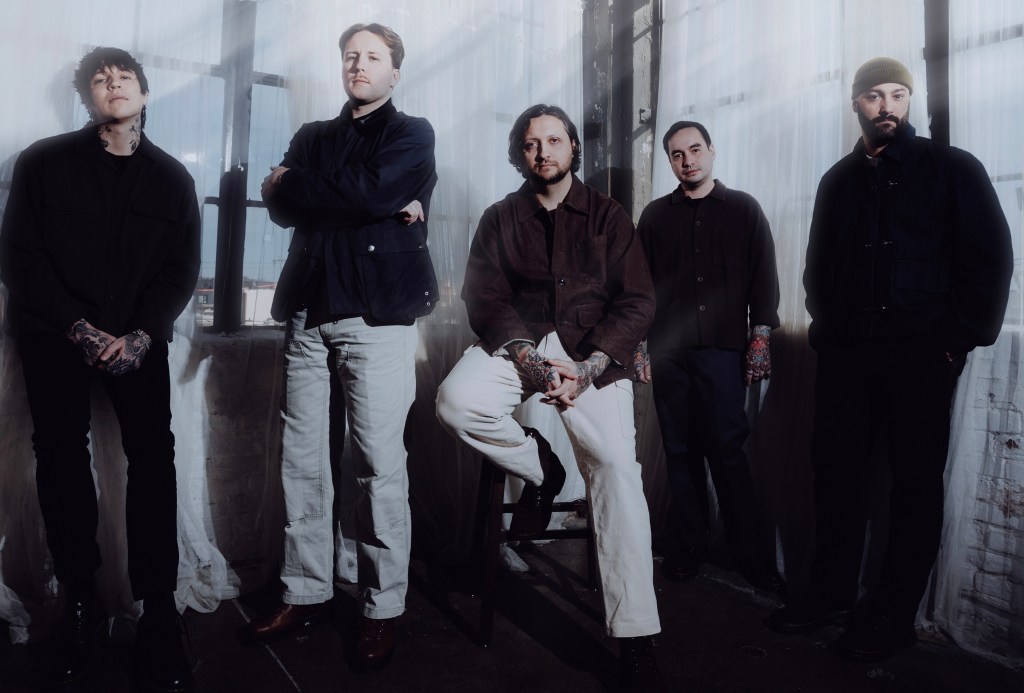
For a band whose entire identity has been built on contrast—beauty and violence, clarity and chaos, the human and the cosmic—ERRA have always existed in the spaces between. But on their seventh full-length album, silence outlives the earth, the Alabama metal visionaries don’t simply explore that in-between space. They inhabit it fully, leaning into the tension that has defined their sound since the beginning and expanding it into something far more immersive than anything they’ve attempted before. The result is an album that feels less like a collection of songs and more like a continuous emotional landscape—one that drifts between anguish and beauty, collapse and clarity, uncertainty and revelation. Across its eleven tracks, silence outlives the earth unfolds as ERRA’s most emotionally powerful work to date, a record that captures the strange gravity of being human in a world constantly shifting beneath our feet.
Since forming in 2009, ERRA have steadily built a reputation for balancing technical precision with emotional vulnerability. Founding members Jesse Cash and Alex Ballew laid the foundation for a sound that fuses intricate guitar work with sweeping melodic atmospheres, while the dynamic between Cash’s clean vocals and the visceral intensity of J.T. Cavey has become one of the band’s defining traits. Alongside bassist Conor Hesse and guitarist Clint Tustin, the band have refined that balance over the years into something unmistakably their own. On silence outlives the earth, that evolution reaches a point where every element—composition, atmosphere, performance, and production—locks into place with striking clarity. Produced once again by Daniel Braunstein, whose work with the band has helped shape their modern sonic identity, the album amplifies ERRA’s extremes while binding them together more cohesively than ever before.
From the opening moments of stelliform, it’s clear the band are operating at a new level of confidence. The track erupts with shimmering guitar textures that quickly give way to a cascade of razor-sharp riffs, the kind that immediately remind listeners why ERRA remain such a vital force in modern metalcore. Cavey’s ferocious delivery slices through the mix while Cash’s soaring melodies create a sense of lift above the turbulence. That dynamic carries seamlessly into further eden, where dizzying rhythmic shifts and intricate guitar interplay push the band’s songwriting forward without ever sacrificing emotional weight. The songs feel expansive rather than mechanical, each movement flowing naturally into the next while maintaining a sense of urgency that keeps the listener fully locked in.
That balance between intensity and atmosphere becomes even more pronounced as the album moves into the crushing weight of gore of being, a track that channels existential tension into one of the heaviest sonic moments in ERRA’s catalog. Jagged riffs and thunderous percussion create a relentless momentum, yet even here the band refuses to stay locked into pure aggression. Melodic passages break through like sudden bursts of light, reminding listeners that ERRA’s music has always been about contrast rather than brute force alone. That emotional interplay reaches a poignant peak on black cloud, where the band tap into something far more intimate. Jesse Cash has spoken about writing the song while anchored to the emotional memory of the day his father died—not as a literal narrative, but as the feeling guiding the music. That sense of grief permeates the track in a way that feels both personal and universal, the kind of emotional gravity that listeners instinctively recognize even if they can’t quite put it into words.
What makes silence outlives the earth so compelling is the way those emotional threads continue to evolve as the album unfolds. cicada siren introduces a darker undercurrent, its hypnotic rhythms and ominous tonal shifts creating an atmosphere that feels almost apocalyptic, while echo sonata shifts the mood toward something more reflective. Layers of shimmering guitars float above a steady rhythmic pulse, giving the song an almost dreamlike quality that contrasts sharply with the tension surrounding it. ERRA have always excelled at writing music that feels expansive without losing its edge, and that ability becomes even more apparent as these tracks bleed into one another, forming a sonic continuum rather than isolated moments.
That sense of emotional descent deepens with lucid threshold, where the band strip their sound down to something colder and more deliberate. The guitars feel stark, the rhythms more restrained, and Cavey’s performance carries an unsettling sense of existential weight. The track lingers in that uneasy space before gradually giving way to the luminous beauty of spiral (of liminal infinity). Where the preceding songs wrestle with disorientation and darkness, this piece feels almost transcendent, its swirling melodies and atmospheric textures creating the impression of drifting through an endless horizon. Cash’s vocals glide effortlessly through the arrangement, grounding the song in human vulnerability even as the instrumentation reaches outward into something vast and celestial.
By the time the album approaches its closing stretch, ERRA shift their focus toward something more mythic in scope. The three-part sequence of i. the many names of god, ii. in the gut of the wolf, and iii. twilight in the reflection of dreams unfolds as a cohesive narrative arc that explores the metaphysical questions lingering beneath the album’s emotional core. The first chapter introduces a towering sonic landscape filled with massive riffs and haunting melodic lines, evoking the human instinct to search for meaning in forces larger than ourselves. That search turns darker in in the gut of the wolf, where suffocating heaviness and primal intensity create a feeling of being swallowed by something vast and uncontrollable. When the final movement arrives, ERRA gather every thread introduced throughout the record and release it in a sweeping, cinematic conclusion. Melodies soar, rhythms expand and contract with tidal force, and the band close the album not with a sense of finality but with something far more reflective—an acknowledgment that the questions posed throughout the record remain unresolved.
What makes silence outlives the earth resonate so deeply is how profoundly human it feels beneath its technical brilliance. The musicianship is extraordinary, the production immaculate, and the songwriting meticulously crafted, yet none of those elements overshadow the emotional sincerity running through the record. Each moment of crushing heaviness is balanced by something fragile or luminous, each burst of aggression countered by reflection. The result is an album that feels immersive from beginning to end, one that invites listeners not simply to hear the music but to inhabit the emotional terrain it creates.
Over the years, ERRA have built their reputation on innovation and consistency, steadily expanding their sound while maintaining the core elements that made them resonate in the first place. With silence outlives the earth, that progression reaches a new level of maturity. The songwriting feels more unified, the themes more deliberate, and the emotional range more expansive than anything the band have attempted before. Rather than simply refining their formula, ERRA push it outward, allowing atmosphere, heaviness, and introspection to coexist with remarkable fluidity.
In a genre often defined by spectacle and sheer aggression, ERRA deliver something far more enduring with silence outlives the earth. It’s an album that confronts grief, uncertainty, and the fragile search for meaning without offering easy answers, choosing instead to explore the emotional landscapes that exist between those questions. The band have always thrived in those spaces of contrast, but here they transform them into something immersive and deeply resonant. By the time the final notes fade, what remains is the unmistakable sense that ERRA have created something profoundly significant—an emotionally devastating album that doesn’t just showcase their strengths as musicians, but lays bare the complex, human heart at the center of their music.
Verdict: 5/5

 Ethereal Metal
Leave a comment