Ryan Murray | Co-Owner | Chief Editor | Contributor | Photographer
r.m.music84@gmail.com
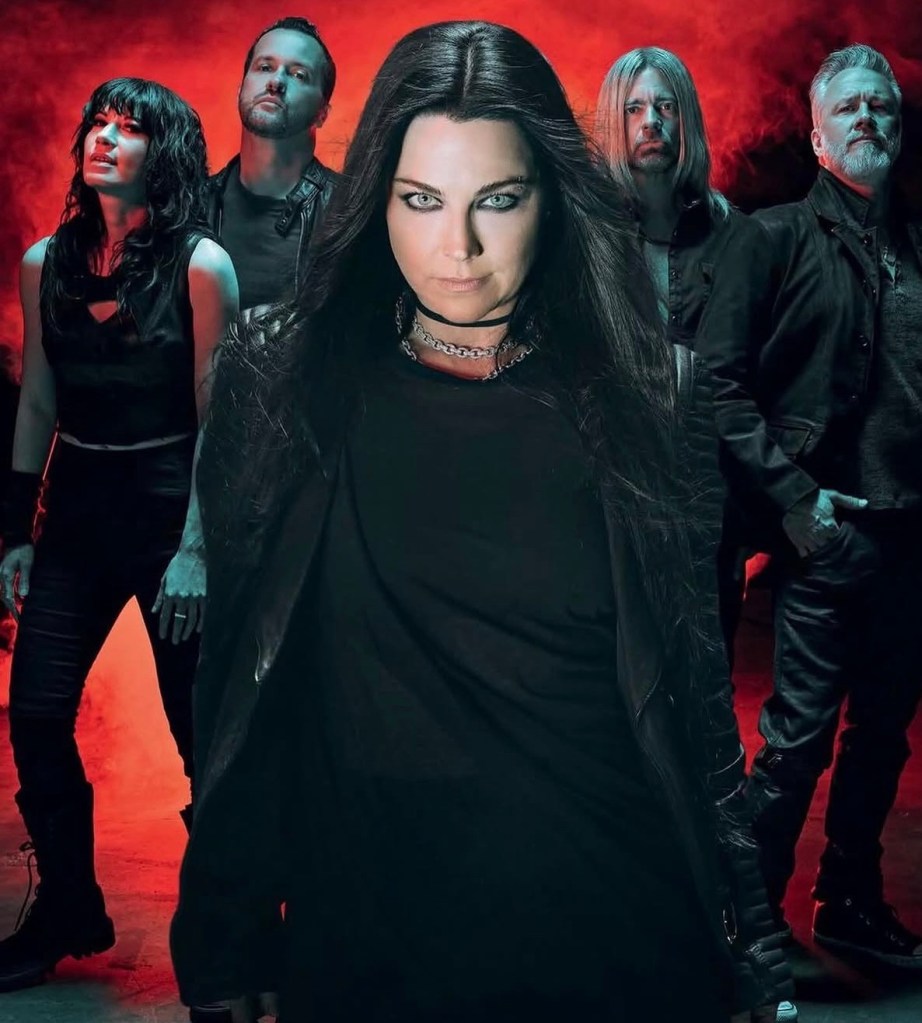
For more than two decades, Evanescence have carried the enormous legacy of Fallen. While longtime fans have embraced the band’s evolution, others have continued to measure every new release against the sound and aesthetic that first catapulted the group into the mainstream.
It’s understandable. Fallen wasn’t merely a successful debut; it became a cultural phenomenon. Bring Me To Life, My Immortal, and the album’s dark, gothic aesthetic helped define an era. Even The Open Door expanded upon that foundation while maintaining much of the atmosphere that drew listeners in from the beginning.
The thing is, Evanescence have never seemed particularly interested in standing still.
Each release has pushed further beyond the confines of the band’s early identity. Whether through experimentation, heavier instrumentation, electronics, orchestral arrangements, or modern production approaches, Amy Lee and company have spent the better part of twenty years refusing to become a nostalgia act. Some fans embraced that evolution. Others spent years hoping for a return to the past.
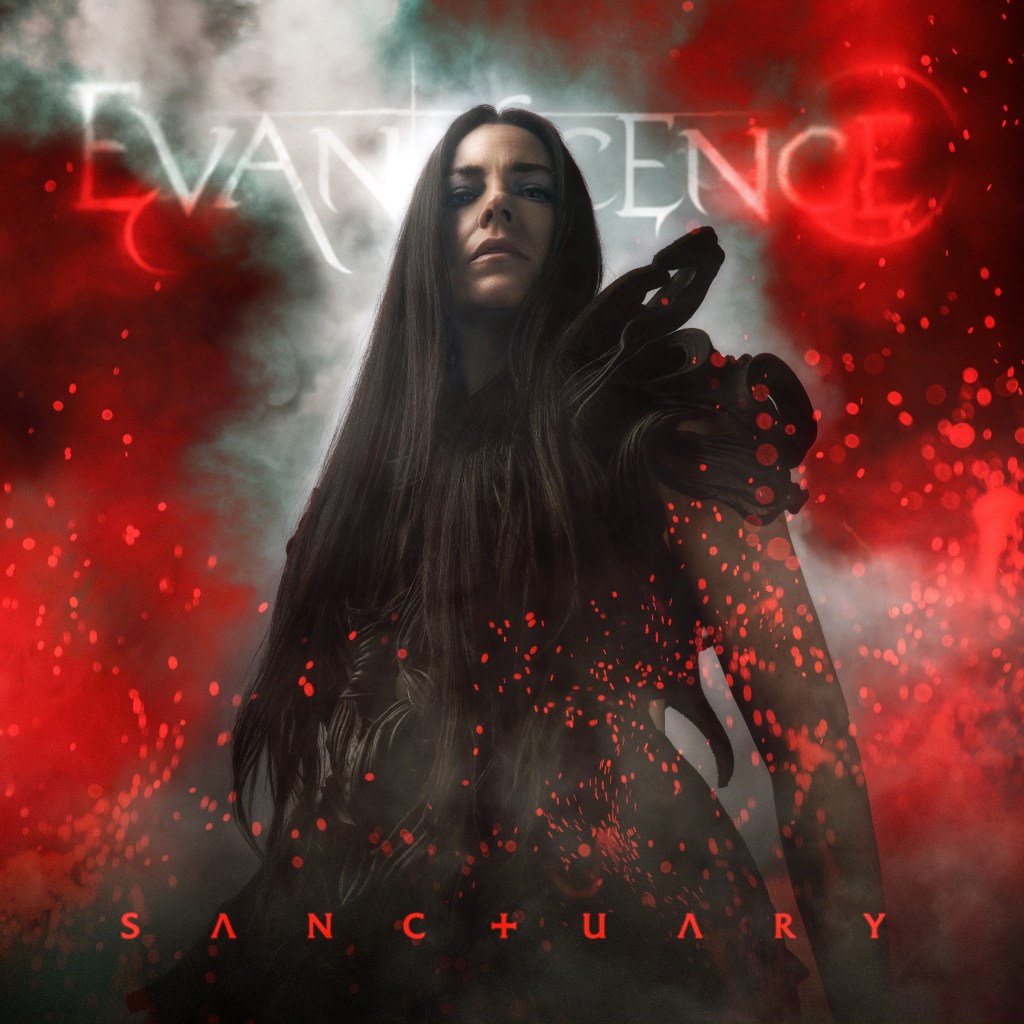
With Sanctuary, Evanescence may have finally delivered their most definitive answer yet.
Working alongside Jordan Fish and Zakk Cervini, the band continues pulling away from expectations and genre boundaries alike, embracing electronics, modern metal textures, massive hooks, and cinematic atmosphere without sacrificing the emotional core that has always made Evanescence unique. The result is not only some of the freshest material the band has released in years—it may also be their most important album to date.
That evolution isn’t driven by producers and collaborators alone. Sanctuary also marks the band’s first studio album to feature Tim McCord on guitar and Emma Anzai on bass, and the impact of that lineup shift is felt throughout the record. McCord’s guitar work helps drive some of the album’s heaviest and most adventurous moments, while Anzai brings a powerful low-end presence that anchors the band’s increasingly expansive sound. Alongside Troy McLawhorn, Will Hunt, and Amy Lee, the entire band sounds energized, unified, and fully invested in pushing Evanescence forward rather than looking backward.
That statement has little to do with future chart positions, streaming numbers, or commercial ambitions.
It has everything to do with timing.
Amy Lee has spoken openly about the frustration, anger, and exhaustion that helped fuel Sanctuary. Not merely political frustration, but the broader emotional fatigue that comes from existing in a world saturated with division, misinformation, outrage, and uncertainty. Yet what makes Sanctuary compelling is that it refuses to remain trapped inside that anger.
This is an album that stares directly into darkness without allowing darkness to have the final word.
That journey begins immediately.
Opening track Beautiful Lie emerges from shimmering synth-laden textures as Lee’s voice glides effortlessly across a soundscape that feels simultaneously familiar and entirely new. There is a cinematic scope to the track, but beneath the beauty lies a warning. The song examines the destructive power of comforting falsehoods and the damage caused when deception is dressed up as something desirable. It’s a fitting introduction to an album deeply concerned with truth, perception, and the consequences of looking away.
Rather than retreating into melancholy, however, Sanctuary quickly finds its pulse.
Tell Me When You’ve Had Enough strikes a remarkable balance between emotional weight and arena-sized accessibility. Its melodies are immediate, its chorus tailor-made for thousands of voices, yet the song never feels manufactured. It serves as one of several moments throughout the record where Evanescence prove they can write massive hooks without sacrificing substance.
Then comes Who Will You Follow, the album’s lead single and perhaps the first real indication that this new era would refuse to play by anyone’s expectations.
Even before the album’s upcoming release, the song felt like a shock to the system. Hearing it within the context of the full album only strengthens its impact. Instrumentally, the track carries an urgency that mirrors its lyrical questions, while an unexpected rhythmic shift sends the song into fascinating territory. The instrumental section breaks into what feels like measures of 7/8 before briefly touching 8/8 and ultimately resolving back into a familiar time signature. It is a subtle but powerful choice that creates tension without sacrificing momentum. Like many songs on Sanctuary, its message can be interpreted through multiple lenses, making it all the more effective.
One of the most striking aspects of the album is how confidently Evanescence embraces its electronic influences.
Tracks like Rapture, About Us, and Self Destruct showcase a band that understands modern production without becoming enslaved to trends. Rapture leans heavily into synth-driven territory, surrounding Lee’s angelic vocals with an atmosphere that feels simultaneously bombastic and unsettling. There is beauty here, but also unease—a recurring theme throughout the record. At the same time, there are unmistakable echoes of the Origin era woven throughout the track, as its dark electronic textures and haunting atmosphere recall some of Evanescence’s earliest sonic explorations while still feeling undeniably modern.
About Us may be one of the clearest examples of the Jordan Fish and Zakk Cervini influence. Electronics surge to the forefront as Lee delivers the cutting declaration, “…they don’t give a damn about us.” The song channels frustration into something powerful and immediate rather than hopeless. Its energy feels urgent, but its purpose remains focused.
Meanwhile, Self Destruct combines electronic textures with down-tuned guitars and one of the album’s heaviest moments. The modern metal breakdown absolutely lands with pure fire, yet the track’s greatest strength may be its ability to expand beyond brute force, eventually swelling with orchestral strings that elevate the song into something much larger than a simple heavy hitter.
Fans already familiar with Afterlife through Netflix’s Devil May Cry may initially have viewed the song as a standalone addition to the band’s catalog.
I’ll be the first to admit I was hoping for twelve entirely new tracks on Sanctuary. Once Who Will You Follow arrived, however, it became easier to see where Afterlife might fit within the album’s larger framework.
Now, having heard the record from beginning to end, its inclusion feels essential.
Not only does it align sonically with the surrounding material, but it also strengthens the album’s thematic foundation. Its grit, urgency, and emotional tension flow naturally alongside the rest of the record, making it feel less like an outside addition and more like a crucial chapter within the story Evanescence are telling.
If there is one song that encapsulates the album’s central message, however, it may be the title track itself.
After years of waiting, Evanescence finally delivers a title track, and Sanctuary proves worth every second of that wait.
Built upon sleek electronics, atmospheric textures, and whispered vocals, the song gradually unfolds into one of the album’s most memorable statements. When Lee quietly declares, “the power is ours,” before the song explodes forward, the moment feels earned rather than manufactured. Then comes the chorus:
“Sanctuary, breathe it in scream it out. No one is coming to save us.”
It is both warning and empowerment.
The line acknowledges harsh reality while simultaneously rejecting helplessness. The album’s title suddenly takes on greater significance. Sanctuary is not escape. It is not denial. It is not pretending everything is fine.
It is finding strength despite the chaos.
That perspective becomes even more powerful when the album slows down.
I’ve already seen criticism aimed at How Do I Heal and Forever Without You, with some arguing that the songs unnecessarily reduce the album’s momentum. I couldn’t disagree more.
In fact, these tracks are absolutely necessary.
Without them, the record risks becoming emotionally one-dimensional.
How Do I Heal begins with little more than piano before gradually opening into one of Lee’s most vulnerable vocal performances. The addition of Dave Eggar’s cello provides an aching warmth that perfectly complements the song’s emotional core. Rather than serving as filler, the track creates space for reflection amid the surrounding intensity.
Forever Without You proves equally powerful.
Whether intentional or not, the lyric “This is the last tear fallen, this is the last open door” feels impossible to ignore. For longtime fans, the reference lands with tremendous weight. More importantly, it functions as a moment of personal reckoning.
Lee belts, “But I lost my mind. Thought I’d fall forever without you. Turns out forever without you is good for me,” and the delivery carries both devastation and liberation. The pain remains present, but so does healing.
That distinction matters.
Throughout Sanctuary, Evanescence repeatedly acknowledges suffering without becoming consumed by it.
Even Calm Down, with its mid-tempo pacing and dreamlike atmosphere, contributes to that emotional balancing act. There are moments where it feels as though the spirit of the Origin era collides with the eerie intimacy of Snow White Queen, all filtered through a far more modern lens. Lee’s ghostly vocal performance drifts through the track like a memory that refuses to fade.
By the time the album reaches its conclusion, a transformation has taken place. Yes, the frustration and anger remains. The awareness of injustice remains.
Yet the record refuses to end there.
Instead, Wide Open Heart emerges as the emotional breakthrough that has been building beneath the surface all along. As Lee sings, “Facing the weight of the world with a wide open heart,” the album finally arrives at its destination.
Hope.
Not naive optimism.
Not blind positivity.
Earned hope.
The kind that survives heartbreak, disappointment, betrayal, grief, and exhaustion.
The kind that continues choosing compassion after being given every reason not to.
That message elevates Sanctuary beyond a collection of songs and transforms it into something far more meaningful. Evanescence have crafted a record that captures the emotional reality of modern life—the anger, confusion, fear, and weariness that so many people feel—while refusing to surrender to cynicism.
And in an age where outrage often feels easier than empathy, that may be the most rebellious thing the band could have done.
Sanctuary is a bold, modern, emotionally resonant statement from a band still willing to evolve more than twenty years into their career. It is heavier, more experimental, more electronic, and more fearless than many will expect. Most importantly, it never loses sight of its humanity.
VERDICT: 5/5
 Ethereal Metal
Leave a comment