Ryan Murray | Co-Owner | Chief Editor | Contributor | Photographer
r.m.music84@gmail.com
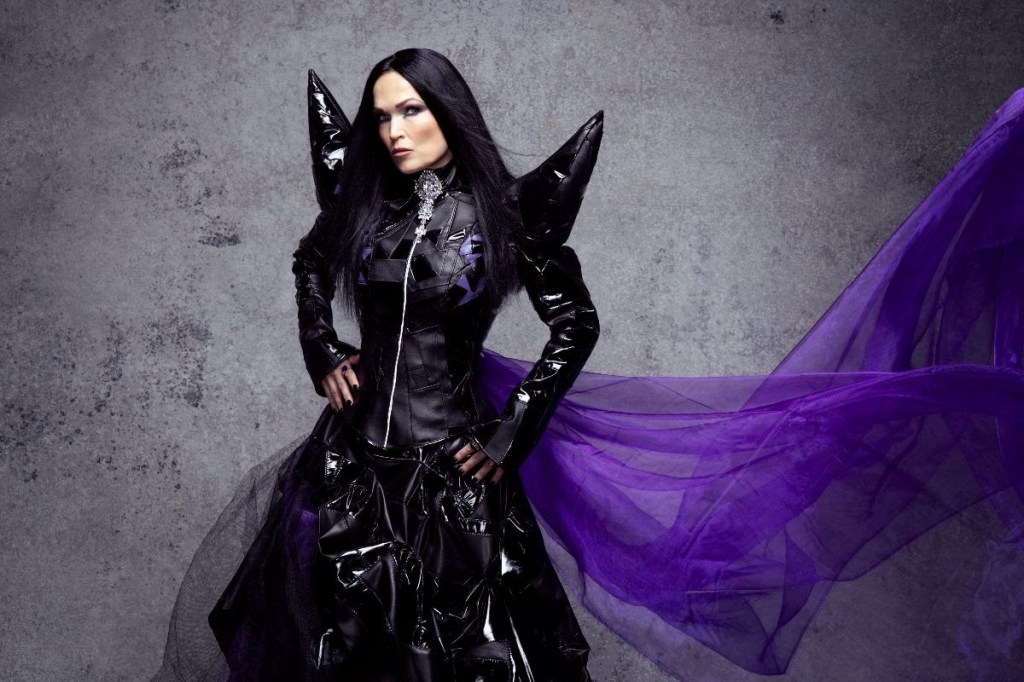
For more than two decades, Tarja Turunen has remained one of the most distinctive voices in symphonic metal. While many artists eventually settle into the comfort of their legacy, Tarja has spent her solo career doing the exact opposite. Whether channeling the orchestral grandeur of My Winter Storm, the crushing weight of What Lies Beneath, or the darker and more experimental corners of her catalog, she has continued to evolve, refusing to be defined solely by the achievements of her past. The result is a body of work that remains as cinematic, emotional, elegant, and powerful today as ever.
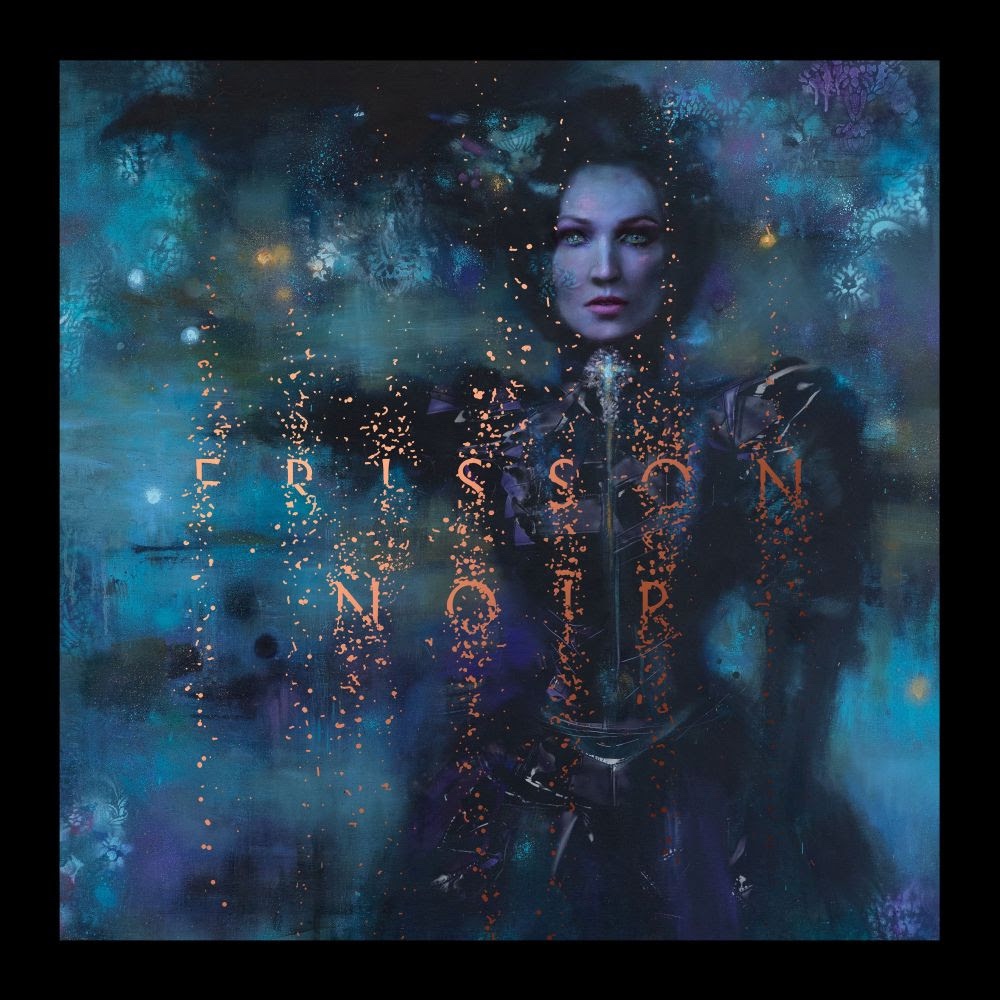
That commitment to artistic evolution is precisely what makes Frisson Noir, arriving June 12 via EarMusic, such a compelling release. What’s more, the album never feels content to simply repeat what has worked before, instead channeling the many eras of Tarja’s career into something darker, heavier, and more refined.
Since 2019’s In The Raw and 2023’s Dark Christmas, fans have eagerly awaited Tarja’s next full-fledged metal offering. The singer herself described Frisson Noir as her heaviest album to date—a claim that often feels more like promotional language than reality when artists make it. I approached that statement with a healthy amount of skepticism.
I shouldn’t have.
Not only is Frisson Noir Tarja’s heaviest record to date, it may also be one of her most ambitious. More importantly, its greatest strength isn’t simply the weight of its riffs or the aggression of its arrangements. Rather than revisiting her past, Tarja has taken every era of her career and forged them into something darker, heavier, and more refined than what came before.
This is an album where crushing guitars coexist with sweeping orchestras. Where gothic atmosphere collides with modern production. Where choirs, cinematic textures, progressive flourishes, and thunderous drums all serve a greater purpose rather than competing for attention.
The result feels less like a collection of songs and more like a fully realized world, one that invites listeners to lose themselves within its darkness, beauty, and cinematic scope.
That world begins with the appropriately titled Intro, a brief but highly immersive instrumental piece built around meditative textures, distant tones, and what feels almost like binaural frequencies quietly pulling the listener inward. A solitary bell rings out before giving way to the title track, creating the sensation of crossing a threshold into something unknown.
The title track, Frisson Noir, unfolds patiently at first, its elegant keys and swelling synths gradually building tension before erupting into a massive riff that lands with startling force. The contrast between Tarja’s ethereal vocal delivery and the song’s crushing instrumentation immediately establishes the album’s identity. There are unmistakable echoes of the My Winter Storm era present throughout its gothic atmosphere, yet the production feels sharper, darker, and more contemporary than anything she has attempted before.
If the title track serves as the invitation, The Eternal Return wastes no time reminding listeners just how heavy this album can become.
Built upon one of the most aggressive guitar performances of Tarja’s solo career, the track flirts with melodic death metal territory without ever abandoning the symphonic grandeur that defines her sound. Towering choirs rise behind the instrumentation while Tarja’s voice soars above the chaos with complete confidence. Every orchestral flourish, vocal harmony, guitar layer, and percussive detail lands with remarkable clarity.
One of Frisson Noir’s most impressive qualities is how naturally it balances aggression with elegance.
Leap of Faith, the long-awaited duet with former Nightwish bandmate Marko Hietala, is a perfect example of that balance. After Tarja joined Marko on his solo track Left On Mars, fans naturally wondered if the favor would one day be returned. Thankfully, it has, and the result is everything longtime listeners could have hoped for. Opening with haunting strings and atmospheric vocals that recall Century Child, the track evolves into a progressive, emotionally charged exchange between two voices that still share undeniable chemistry. Rather than leaning on nostalgia, the song feels immediate and alive—a reminder that some musical partnerships retain their magic no matter how much time has passed.
At Sea, the album’s first single, is its most expansive composition, stretching past ten minutes without ever losing emotional focus. Featuring Mervi Myllyoja and Niklas Pokki, it moves through shifting structures, dizzying orchestral arrangements, and moments of quiet introspection. In an era defined by instant gratification, At Sea feels almost defiant in its patience, rewarding listeners who are willing to sit inside its evolving atmosphere.
Blaze Forever brings things back to earth with a bombastic swagger and bite, driven by punchy riffs, infectious momentum, and some of the album’s most immediate hooks. But even here, darkness creeps in. Reverse vocal textures emerge throughout the track, culminating in a warped, unsettling conclusion that lingers long after it ends.
Yet one of Frisson Noir’s greatest strengths is its refusal to linger in any one mood for too long. Just as the album threatens to settle into pure heaviness, Tarja begins pulling the listener into more introspective and atmospheric territory.
Anemoia shifts into more reflective territory, built on Spanish guitar, piano, and haunting cello performances from Julián Bedmar and Valter Freitas. Exploring the strange feeling of nostalgia for a place or time never actually experienced, its beautiful atmosphere feels almost weightless, drifting somewhere between memory and imagination, while The Trace Outlives pulls the listener into much darker waters. Featuring the remarkable Sayo Komada on shamisen, the song balances crushing heaviness with an almost ghostly sense of elegance, allowing Tarja’s vocals to weave effortlessly between towering orchestration and moments of quiet tension. It is a fascinating collision of familiar and unfamiliar elements, embracing everything that has long defined Tarja’s sound while simultaneously pushing it into unexpected territory. And melodically, I just can’t get Michael Jackson’s Smooth Criminal out of my head during the verses. Once that connection clicked, it became impossible to unhear—but somehow, against all odds, it works.
Tango, featuring members of Apocalyptica, feels like a collision between the sophistication of What Lies Beneath and the raw emotional pull of Tarja’s modern era. The cello work is rich and intoxicating, weaving around a mid-tempo groove that feels both elegant and deeply infectious. It is a reminder of everything that has made Tarja such a compelling artist for over two decades: power, control, atmosphere, and emotional depth.
I Don’t Care, featuring Dani Filth, could easily have been a novelty collaboration in lesser hands. Instead, it becomes one of the album’s most striking moments. Filth’s guttural delivery and Tarja’s soaring vocals collide rather than compete, creating tension that feels theatrical, dangerous, and completely intentional. It is one of the clearest examples of Frisson Noir’s ability to turn contrast into cohesion. That said, I did slightly prefer the single version over the album mix, as Dani carries the entire track on the album version alongside Tarja, which offers less dynamic variation, whereas the single version splits their parts more distinctly.
By the time the album approaches its conclusion, one thing becomes abundantly clear: Frisson Noir is the sound of an artist still evolving. Echoes of Oceanborn, Century Child, My Winter Storm, and What Lies Beneath can certainly be heard throughout the record, but they never define it. Instead, Tarja uses those foundations to build something darker, heavier, and more refined than anything she has released in years.
The closing stretch reinforces that idea, with Against The Odds unfolding like a cinematic finale. Featuring Chad Smith behind the kit, the track feels larger with every passing moment, pairing Tarja’s soaring vocals and sweeping orchestral arrangements with a rhythmic foundation that steadily drives the song forward. There is a quiet confidence to Smith’s performance—never flashy, never intrusive, yet absolutely essential to the song’s emotional rise. As strings swell and the arrangement expands toward its climax, Against The Odds feels less like a closing track and more like a statement of purpose before dissolving into the ambient Outro, bringing the journey full circle.
More than anything, Frisson Noir feels like a synthesis—it’s Tarja’s past, present, and future colliding in real time, refined, heavier, and more emotionally direct than anything she has delivered in years. In a genre often obsessed with legacy, Tarja continues to redefine what legacy actually means.
Heavy, haunting, cinematic, and fearless, Frisson Noir stands among the finest releases of Tarja’s solo career.
VERDICT: 5/5


Leave a Reply