Ryan Murray | Co-Owner | Chief Editor | Contributor | Photographer
r.m.music84@gmail.com
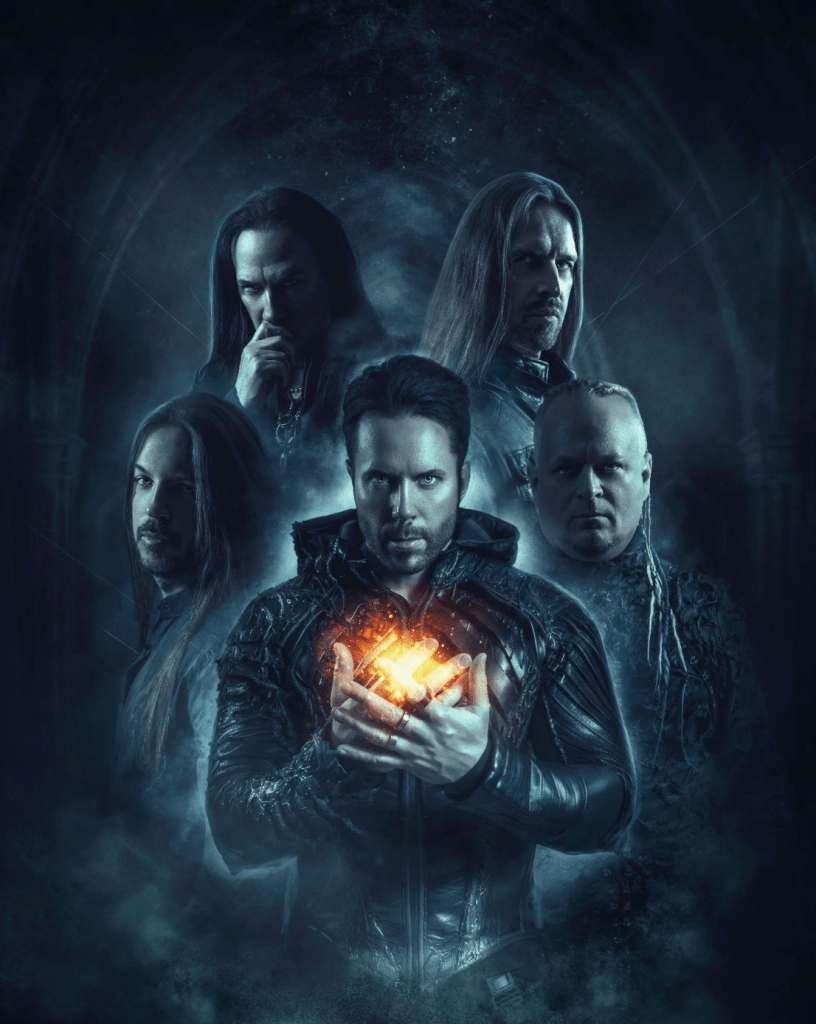
KAMELOT opens the gates to RavenHill and delivers one of its most cinematic, atmospheric, and psychologically immersive albums yet.
There are concept albums that tell you a story. Then there are concept albums that create a world so vivid that, by the time the final note fades, you feel like you’ve actually spent time there.
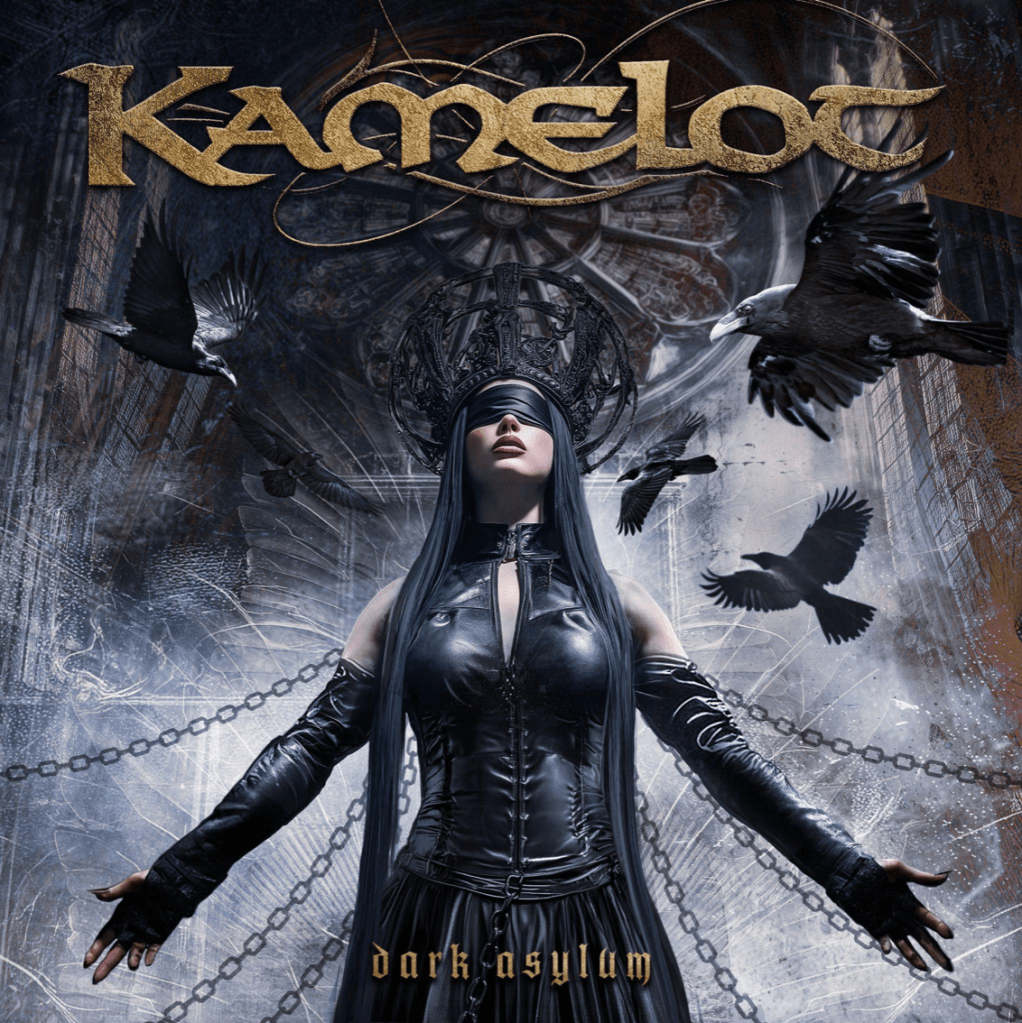
Dark Asylum, KAMELOT’s 14th studio album, is very much the latter.
Arriving August 28 through Napalm Records, the album takes us beyond the gates of RavenHill Asylum, an imposing Victorian-era institution built from a former cathedral where faith, science, and madness collide. But as the story unfolds, RavenHill becomes increasingly difficult to define as simply a physical location. It is a place of fractured identities, buried memories, longing, fear, control, and transformation—and perhaps, ultimately, a representation of the darkness we construct within ourselves.
That concept is not merely window dressing for the music.
It is the music.
KAMELOT has always been exceptional at blending power metal with symphonic grandeur, theatrical storytelling, and unforgettable melodies. But on Dark Asylum, the band takes a noticeably deeper dive into cinematic territory. The orchestration, atmospheric passages, vocal arrangements, and dramatic shifts aren’t simply making the songs sound bigger; they are helping build the walls, corridors, locked rooms, and shadowy corners of RavenHill.
And the deeper you go, the more the album starts to feel like each song is another room inside the asylum.
The journey begins with Sanctorium, a brief but atmospheric introduction that feels less like a traditional opening track and more like the doors of RavenHill slowly creaking open. From there, Ashen World immediately throws us into classic KAMELOT territory, but with an expanded cinematic scope. Thomas Youngblood’s expressive guitar work, sweeping orchestration, Tommy Karevik’s dynamic vocal performance, and the ethereal presence of Ignacia Fernández combine to create a song that feels simultaneously triumphant and ominous. Ignacia doesn’t simply decorate the track; her voice becomes another texture within its increasingly expansive atmosphere.
And then comes the title track.
Dark Asylum feels like the point where the listener realizes this isn’t simply a collection of songs built around a cool gothic aesthetic. The world of RavenHill is beginning to take shape. Kiara Huber’s evocative introduction helps establish that sense of place before KAMELOT pulls us further into its walls, while the band’s familiar hooks keep the song firmly rooted in what makes KAMELOT unmistakably KAMELOT.
That balance is important throughout this album.
For all of its darkness, Dark Asylum never loses sight of melody.
Sanctuary is perhaps one of the clearest examples. The song brings together Tommy with Ignacia Fernández and Visions of Atlantis vocalist Clémentine Delauney, and the result is one of the album’s most compelling vocal arrangements. There is a beautiful tension in the way these voices interact, almost as though we’re hearing different perspectives emerge from the same psychological landscape. The song asks a deceptively simple question: What exactly is sanctuary?
Is it freedom?
Is it escape?
Or is sanctuary found only after confronting the place we’ve been running from?
That question seems to linger long after the song ends.
The short Nocte Veritas acts almost like another passageway between rooms before One Last Masquerade arrives with Avantasia mastermind Tobias Sammet. And this is precisely the kind of collaboration that makes sense within the world KAMELOT has created. Tobias’ unmistakable voice adds another layer of theatrical gravitas to a song already steeped in the idea of performance, identity, and the masks we choose to wear.
And then the album turns inward.
Ivy, My Dear is one of the tracks that stayed with me the most—not necessarily because it is the biggest or heaviest moment on the record, but because of how beautifully it translates the psychological side of RavenHill into music.
During our interview, Tommy Karevik described the imagery behind the song: someone sitting inside a cell, looking through the bars toward the moon, imagining ivy climbing the walls. But the ivy can also represent memories—something that grows and spreads until it begins to cloud the person’s mind.
That image completely changes the way the song feels.
The ivy isn’t simply growing around the character.
It can be growing inside them.
And suddenly the cell becomes much more than a physical prison.
That idea erupts in Godlike Alchemy, where KAMELOT shifts into something more intense, almost ritualistic, digging deep into the idea that the power to silence the madness and find peace within the chaos may have been inside us all along. The Sleeping Mind (Orphic Paradigm) then pulls the listener even further down the rabbit hole, plunging into the darker, more mysterious depths of consciousness. Together, these tracks turn RavenHill inward, shifting the focus away from the horrors lurking beyond its walls and toward the far more unsettling, and ultimately empowering, battle happening inside the mind.
Kaleidoscope continues that fractured perspective beautifully. The title itself feels almost like a description of the album’s psychological framework: memories, identities, emotions, and perceptions constantly shifting depending on how you look at them. Nothing feels completely fixed.
And that leads into Enigma (Think of Me), another track that finds beauty in longing, with sweeping strings adding even more depth to an already immersive song.
There is something almost romantic about the way KAMELOT approaches the search for connection here, but it never becomes saccharine. The song carries the weight of someone reaching through the darkness for something familiar, something remembered, perhaps even something that may no longer exist in the way they remember it.
That sense of longing is crucial because it keeps Dark Asylum from becoming a purely gothic exercise.
There are real emotions underneath the architecture.
Real people behind the masks.
Real memories behind the walls.
Cassandra’s Disease then brings another shift in tone, adding a darker and more uneasy dimension to the album’s psychological narrative. By this point, RavenHill no longer feels like somewhere we’re merely visiting. The further the record progresses, the more it feels as though the asylum is beginning to understand its inhabitants—and perhaps manipulate them.
Then comes one of the album’s most fascinating pieces of KAMELOT history.
Beneath the Moon (Tunglið) features the voices of Rannveig Sif Sigurðardóttir and Sólveig Sara Leupold, alongside Eluveitie’s Lea-Sophie Fischer on violin. The combination is gorgeous, ethereal, and almost otherworldly.
But longtime KAMELOT fans may catch something particularly special here.
Rannveig Sif Sigurðardóttir isn’t a completely new voice in the KAMELOT universe. She previously appeared on A Sailorman’s Hymn from 1999’s The Fourth Legacy. Nearly three decades later, her voice returns to the band’s world.
And there is something incredibly fitting about that.
Her vocals possess an eerie, timeless quality that feels almost tailor-made for Dark Asylum. Rather than sounding like a nostalgic callback simply inserted to reward longtime fans, her presence feels completely natural within RavenHill. It’s almost as if a voice from KAMELOT’s past has wandered through the asylum’s halls and found itself back inside the band’s story.
Paired with Sólveig’s ethereal vocals and Fischer’s violin, Beneath the Moon (Tunglið) becomes one of the album’s most atmospheric moments—and one of its most beautiful.
By the time The Puppet King arrives, the imagery of control that has been quietly building throughout the record comes into sharper focus. The title alone suggests manipulation, unseen hands, and the possibility that the person wandering RavenHill may not be the one controlling their own journey.
And then we reach Sanctum Requiem.
The closing track is brief, but its placement is everything.
After spending the album moving through RavenHill’s corridors, confronting fractured memories, longing, identity, darkness, and the possibility of transformation, the record doesn’t simply slam the door and walk away.
It leaves you standing there.
And that’s where the larger meaning of Dark Asylum really starts to hit.
KAMELOT has created an asylum that can be interpreted in several ways. It is a physical place. It is a gothic setting. It is a psychological landscape. It is a collection of memories. It is a prison.
But perhaps it is also something we all carry.
Because what if RavenHill isn’t somewhere we need to escape from?
What if it is somewhere we have to confront ourselves?
That is what elevates Dark Asylum beyond its admittedly impressive aesthetic.
KAMELOT could have simply made a dark, theatrical, symphonic metal album and wrapped it in Victorian imagery. They didn’t. The music consistently reinforces the concept, and the concept gives the music another layer to explore.
The production plays a huge role in that. Longtime producer Sascha Paeth returns alongside KAMELOT, with Jacob Hansen handling mixing and mastering, and the album has the kind of expansive production necessary to make all of these moving parts work.
The guest performances are also carefully integrated into that world. Ignacia Fernández appears on Ashen World and Sanctuary, with Clémentine Delauney joining her on the latter; Tobias Sammet brings his distinctive voice to One Last Masquerade; and Beneath the Moon (Tunglið) brings together Rannveig Sif Sigurðardóttir, Sólveig Sara Leupold, and Lea-Sophie Fischer.
None of these appearances feel like random celebrity cameos.
They feel like characters.
Different voices.
Different perspectives.
Different rooms inside the same asylum.
And that’s ultimately what makes Dark Asylum work so well.
This is still KAMELOT.
The hooks are here. The soaring vocals are here. The guitars are here. The symphonic arrangements are here. The theatricality that has been part of the band’s identity for decades is absolutely here.
But the band has pushed those familiar ingredients further into cinematic territory than it has on previous records.
The result is an album that doesn’t ask you to simply listen, but draws you to want to enter inside. And once you’re inside, the walls start becoming less literal.
The locked doors start feeling familiar.
The masks start looking like our own.
The memories become harder to separate from reality.
And eventually, the question changes. You’re no longer asking: “How do I get out?” Instead, you’re asking “What am I going to find if I open the next door?”
That is the real strength of Dark Asylum.
KAMELOT didn’t simply build RavenHill.
They built a place where darkness, memory, identity, fear, longing, and hope can all exist in the same room.
And maybe the most unsettling realization of all is that RavenHill doesn’t necessarily have to be somewhere we fear.
Maybe it’s the place where we finally confront the parts of ourselves we’ve spent our lives trying to keep locked away.
Once you step inside RavenHill, there is no turning back. And honestly?
I’m not sure I’d want to leave.
Dark Asylum draws you so deeply into KAMELOT’s cinematic world that RavenHill begins to feel less like a place you’re trying to escape and more like somewhere you’re strangely reluctant to leave. Beneath its gothic darkness, soaring melodies, and immersive storytelling lies something unexpectedly beautiful—a journey through the shadows that ultimately leads toward hope, transformation, and perhaps sanctuary.
VERDICT: 5/5
Napalm Records
 Ethereal Metal
Leave a comment