Ryan Murray | Co-Owner | Chief Editor | Contributor | Photographer
r.m.music84@gmail.com

There’s a particular kind of vulnerability that comes from putting your most uncomfortable memories into words and then allowing the rest of the world to hear them. It takes a certain level of honesty to revisit the moments that shaped you, especially the ones you might have spent years trying to bury. For Love Ghost frontman Finnegan Bell, that process has become the foundation of Thirteen, a deeply personal thirteen-song collection that pulls listeners into a world of isolation, identity, generational pain, and the complicated business of trying to find beauty in experiences that were anything but beautiful.
Set for release on Friday, November 13, the album carries a title with a very specific personal significance. At thirteen, Bell was expelled from school, an experience that coincided with the beginning of a much deeper feeling that he didn’t belong. That sense of being on the outside looking in became one of the emotional starting points for the record. Bell has described Thirteen as the most vulnerable album he has ever made, a collection of memories he probably should have buried. After spending time with the record, that description feels entirely appropriate.
What makes Thirteen such an emotional experience is how completely it strips away the distractions. There is a rawness at its core that allows the subject matter to take center stage, and even when the music picks up, the emotional weight never really disappears. The album moves through different shades of intensity, but there is a consistent feeling of exposure running beneath it all. You aren’t given much opportunity to distance yourself from what Bell is putting forward. The words carry the weight, the subject matter stays close, and the vulnerability remains present even when the energy shifts.
The acoustic Midwest-grunge direction gives the album a distinct identity, one that feels particularly suited to the stories being told. There is an intimacy to this approach that allows the material to breathe without sanding down its rougher edges. Bell has spoken about wanting to embrace the uglier, more uncomfortable parts of life rather than make everything sound pretty. That philosophy is central to the experience of Thirteen. The record understands that some experiences don’t come with neat conclusions, and some memories remain complicated long after the circumstances surrounding them have changed.
The involvement of producer Mike Summers adds another interesting dimension to the project. Known for his work with artists including Kendrick Lamar, Lil Wayne, Snoop Dogg, Mac Miller, Rico Nasty, and Mike Posner, Summers brings a production background that spans considerably different musical worlds. Bell has explained that the two worked remotely, with Bell engineering his own vocals and acoustic parts while developing a clear visual and emotional direction for the songs. The result is a record that maintains an intimate, personal foundation while allowing its atmosphere to expand around the storytelling.
There is a lot to unpack across these thirteen songs, and the album’s emotional impact comes from the way its themes continue to circle back to the same uncomfortable questions. What happens when the experiences that made you feel different become part of your identity? How much of the person you are today is still connected to the person you were when you first began feeling rejected? And how do you learn to recognize the damage you’ve carried without allowing it to dictate everything that comes next?
The opening stretch, from Church For A Vampire and Pasadena into Into The Woods, establishes the world Bell is inviting us into. Into The Woods is particularly important to that journey. Bell has identified it as the first song he wrote when he set out to create this acoustic Midwest-grunge record, making it the starting point for the creative direction that would eventually become Thirteen. There is something fitting about beginning the record with the song that first opened the door. It gives the album a sense of origin, allowing the rest of the material to unfold from that initial creative impulse.
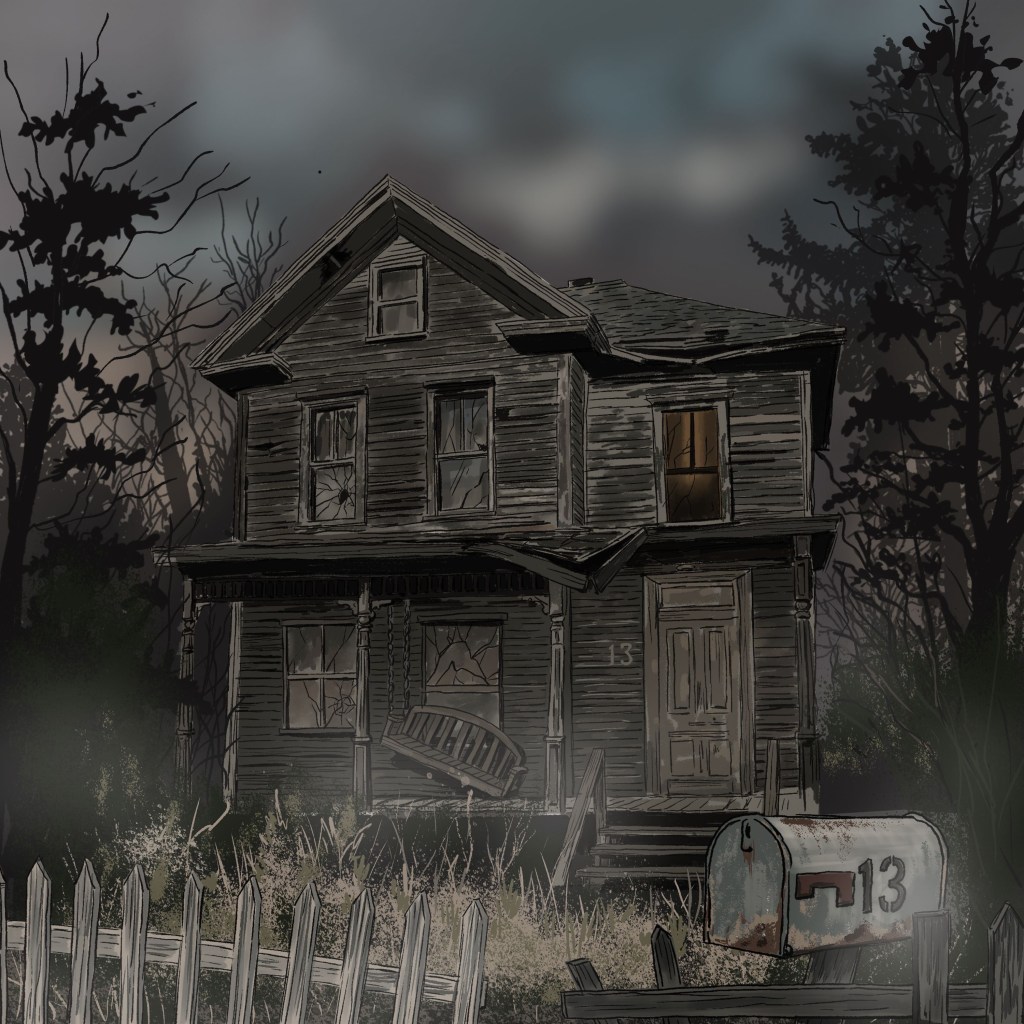
That introspective atmosphere continues through Turpentine This House and Can’t Run Forever, before the record moves into Am I Evil? and Something In The Water. Bell has described Turpentine This House as an emotional blueprint for the album, and its central imagery carries a fascinating tension between destruction, memory, and the possibility of starting over. He has explained that the song was inspired in part by seeing his family’s house and neighborhood burn during a wildfire. The fire became a metaphor for watching painful memories disappear, even while acknowledging the very real tragedy of losing a home and the belongings inside it.
That distinction matters. There is a complicated emotional space between wanting to escape your past and recognizing that the process of moving forward can involve genuine loss. The image of a house becomes something much larger than a physical structure. It holds memories, relationships, experiences, and versions of ourselves that can be difficult to leave behind. Sometimes the idea of starting over sounds liberating until you realize what has to be left in the ashes.
Something In The Water is one of the album’s most affecting moments, and for me, one of the two songs that hit hardest. Its subject matter reaches beyond individual experience and into the idea of generational trauma, examining the possibility that some of the pain we carry began long before we were ever here. During our interview, Bell had specifically identified the song as an exploration of generational trauma, and that context gives its lyrics an especially heavy emotional resonance. There is something difficult about considering how much of what we struggle with might have been passed down through families, how certain patterns and wounds can become so familiar that we eventually mistake them for an unavoidable part of life. The lyrics are what make this one land so powerfully. Rather than treating the subject as an abstract idea, the song brings the listener face to face with something deeply human and often uncomfortable.
The journey then moves through Snake Boy, Blood & Roses, and Dog Teeth & Rosaries, before arriving at Pointless. Bell has discussed the latter’s exploration of unrealized potential, the alternate versions of ourselves we sometimes mourn, and the uncertainty of where life might lead. That uncertainty can be devastating, particularly when we find ourselves looking back at the paths we didn’t take or the people we thought we would become. There is also a small opening for hope in recognizing that the future remains unwritten. The experiences that brought us to this point don’t necessarily determine where we go next.
By the time I Left My Home leads into Filthy Hands, the album has brought us through a considerable amount of emotional territory. Filthy Hands stands alongside Something In The Water as one of the two tracks that hit me hardest, particularly because of the lyrics and subject matter. There is a real difference between hearing a song that sounds emotional and hearing one whose words genuinely get under your skin. Filthy Hands belongs firmly in the latter category. It reinforces just how much of this album’s strength comes from the willingness to put difficult thoughts and experiences into the open. Across Thirteen, Bell repeatedly brings the listener into uncomfortable territory, and this track leaves a particularly strong impression.
That balance between darkness and the possibility of something better is one of the most interesting aspects of Thirteen. This is an emotionally heavy record, but it isn’t one that feels interested in leaving the listener permanently trapped inside the pain. Bell’s own comments suggest that revisiting these memories has allowed him to understand them from a different perspective. He has acknowledged that isolation and feeling misunderstood haven’t simply disappeared with age; they have evolved alongside him. The album becomes a conversation between the person he was and the person he is now, with both versions occupying the same emotional space.
That is perhaps what makes the record so relatable beyond the specifics of Bell’s experiences. Most people have memories they would rather not revisit. We all have moments that changed how we viewed ourselves, relationships that left marks, and experiences that can resurface in unexpected ways. The circumstances may be different, but the feelings of rejection, isolation, confusion, and searching for somewhere to belong are far from unique.
There is also something significant about the way Bell has approached the recording process. In discussing the album, he has described working alone late at night, engineering his vocals and acoustic parts without the usual presence of other people in the room. He explained that this environment allowed him to avoid holding back emotionally, and that sharing the finished songs with even a small group of friends and family brought feelings he hadn’t anticipated. That reaction says a lot about the material. When something is this personal, allowing it to leave your hands and become something other people can experience is its own kind of vulnerability.
And that’s where Thirteen succeeds. It doesn’t need to make every moment comfortable, and it doesn’t attempt to wrap every difficult subject in an easy resolution. Its emotional rollercoaster comes from the willingness to move through those experiences without pretending they are simple. Even when the music gains momentum, the underlying heaviness remains. The record continues to pull you back toward its words, its memories, and the experiences that inspired them.
For Love Ghost, Thirteen represents a revealing chapter in the project’s evolution, turning the focus toward Bell’s own experiences and creative perspective. With no guest collaborations, the album feels especially intimate. Thirteen songs, a Friday the 13th release, and a title rooted in the age when he first began feeling he didn’t belong. The symbolism runs deep, but its real strength lies in how those experiences become something listeners can connect with, even if their own stories are different.
Thirteen is raw, introspective, uncomfortable, and deeply human. It leaves plenty of room for the listener to bring their own experiences into the material, and its most powerful moments are the ones that refuse to let the words fade into the background. Something In The Water and Filthy Hands hit especially hard, but the album’s impact comes from the emotional journey connecting all thirteen songs.
Sometimes the hardest memories are the ones that follow us longest. With Thirteen, Finnegan Bell opens the door to those uncomfortable truths, and Love Ghost leaves us with a record that isn’t afraid to confront them.
VERDICT: 4/5


Leave a Reply