Ryan Murray | Co-Owner | Chief Editor | Contributor | Photographer
r.m.music84@gmail.com
Album Review | November 27, 2026
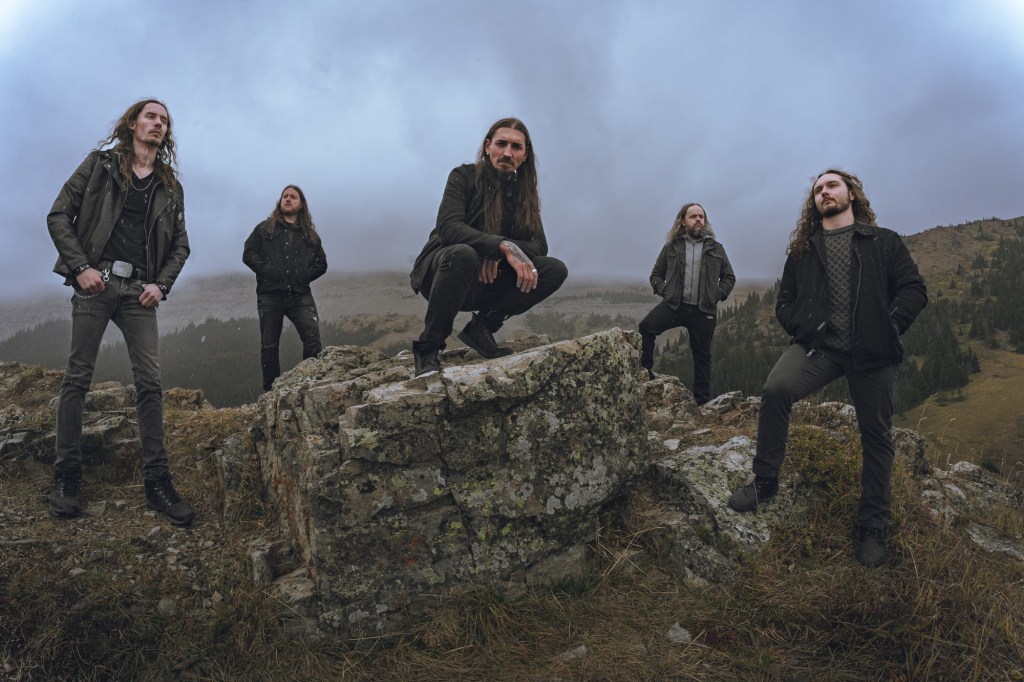
There comes a point in a band’s career when the name on the album cover carries a little more meaning than usual. Five records in, Canadian metal outfit OSYRON have reached that point. Their latest release is self-titled, and there’s something rather fitting about that decision. Fourteen years after forming, with a growing international presence and a musical identity that has taken shape through years of writing, recording, and touring, this feels like a statement of where the band stand today. Not a reinvention, not a nostalgic look backward. A declaration of identity.
That idea runs much deeper than the album title, too. Built around the Greek concept of telos, the idea of an ultimate purpose or destination, Osyron spends much of its nine-track runtime wrestling with identity, adversity, disillusionment, and the uncomfortable business of figuring out who you are when the things you’ve built your life around begin to change. It’s a substantial subject for a metal record, but the band approach it from enough different angles that the material rarely feels repetitive. There’s anger here, certainly, but also reflection, vulnerability, and a fair amount of defiance.
Musically, OSYRON continue to draw from progressive, melodic death, power, and symphonic metal, often within the same composition. That combination has been part of their identity for some time, though there’s a noticeable confidence in how those elements come together on this record. The heavier passages have plenty of bite, the melodic hooks are given room to land, and the more elaborate arrangements generally feel connected to the songs rather than inserted to demonstrate technical ability.
Telos makes an immediate case for that approach. The opening track comes out swinging, with Reed Alton’s forceful delivery setting the tone against a muscular instrumental backdrop. There’s a sense of urgency to the whole thing, particularly as the song confronts the expectations and external pressures that can gradually strip away someone’s sense of self. That same frustration carries into Unkind, although the target shifts from society’s expectations to the emotional damage inflicted by the people and environments around us. The two tracks make for an interesting opening combination. One is about taking ownership of your identity; the other is about refusing to let painful experiences destroy it. Both have an aggressive edge, but Unkind brings a darker character into the mix, moving through dissonant passages and quieter atmospheric moments that give its heavier sections additional impact. There’s a nice bit of contrast between the two, and it helps establish the album’s emotional territory without spending half its runtime explaining the concept.
The conversation takes an interesting turn with Feather & Flame and Higher. Both deal with the struggle to maintain a sense of identity, but their perspectives couldn’t be much further apart. The former looks at aging, mortality, and the gradual loss of innocence, confronting the reality that time changes us whether we’re prepared for it or not. There’s a more reflective quality to its arrangement, with the band allowing some breathing room between the heavier passages and the melodic sections. Tyler Corbett’s bass work adds a welcome dimension to those moments, helping give the track a sense of movement beyond its central guitar lines. Higher, meanwhile, takes a more direct approach to its message, pushing back against conformity and the darkness that can come with losing direction. Its chorus has an immediate melodic pull, and the interplay between Krzysztof Stalmach and Bobby Harley gives the heavier sections plenty of character. There’s an interesting bit of history behind the song, too. Some of its musical foundations date back to 2013, originating with Corbett before eventually becoming the finished composition heard here. That’s a long time for an idea to find its place, but it makes sense within the context of a band whose musical identity has developed over several albums. The finished track feels particularly comfortable balancing accessibility with progressive detail.
One of the more interesting aspects of Osyron is how willing the band are to change the scale of things. Forge the Wake gives them considerably more room to stretch out, bringing a cinematic quality to the record through its expansive arrangement and symphonic touches. There’s a sense of grandeur that recalls elements of the band’s earlier Kingsbane period, though the songwriting here feels more assured in its handling of dynamics. The instrumental passages have room to develop, and the larger moments arrive with a sense of purpose rather than simply adding another layer of noise. That expansive approach makes the transition into Consuming Giants particularly interesting. The latter brings the focus back toward a much more tangible subject, examining humanity’s destruction of the natural world through greed, exploitation, and the endless pursuit of wealth and power. Its groove gives the track a heavier, more immediate character, while distorted ambient textures add an unsettling quality to the arrangement. There’s an obvious difference in scale between the two songs, but they share an appreciation for atmosphere and the way an arrangement can reinforce the ideas behind the lyrics. Forge the Wake looks toward something expansive and almost cinematic; Consuming Giants takes a considerably darker look at what humanity is doing with the world it already has.
The Accursed brings another shift in perspective. Much of the record’s lyrical direction revolves around individual identity and the personal struggle to find purpose, but here the focus expands into collective resistance. There’s a stronger melodic death metal character running through the track, with heavier guitar work and a more forceful rhythmic approach giving it a distinctly aggressive presence. What makes it particularly interesting alongside Remade is the difference in how the two songs approach adversity. The Accursed finds strength in standing together against suffering, while Remade turns inward, examining the personal consequences of regret, forgiveness, mortality, and the desire to become someone different. The latter has a more vulnerable atmosphere, allowing its quieter passages to establish the emotional foundation before the larger melodic sections take hold. Neither song offers an especially comfortable subject, but that contrast gives this part of the album some of its strongest thematic depth. Sometimes survival is about finding others who understand what you’re going through. Other times, the hardest person to face is yourself.
By the time Lost in Reflections arrives, the album’s central question has taken on an entirely different weight. After examining conformity, emotional damage, aging, environmental destruction, collective resistance, and personal transformation, OSYRON close by confronting the uncertainty of losing the identity you’ve spent your life building. It’s an appropriate ending, particularly because it doesn’t attempt to tie everything into some artificially neat conclusion. The atmospheric passages and larger melodic moments give the song room to develop, while Alton’s contrasting vocal delivery adds to its emotional character. The choral elements also help give the closing stretch a broader sense of scale. There’s a certain irony in an album so concerned with finding purpose ending on a song about not knowing exactly who you are anymore. But that’s arguably the most honest way to approach the subject. Finding yourself isn’t always a straightforward journey, and sometimes the questions remain long after the music stops.
Across the record, Alton, Stalmach, Harley, Corbett, and Cody Anstey demonstrate the value of having a shared creative direction. There’s plenty of technical detail in the guitar work, and the rhythm section is more than capable of keeping up with the changing demands of the arrangements. Alton’s ability to move between contrasting vocal approaches is another important part of the band’s identity, giving the songs room to move between aggression and melody without losing their character. What stands out is how these elements serve the songwriting. The musicianship is certainly there, but the arrangements don’t feel like exercises in showing off. Even when the band venture into more progressive territory, there’s usually a melodic or emotional anchor holding things together.
It’s worth remembering that Momentous, released in 2022, helped bring OSYRON to a much wider audience. Tracks such as Dominion Day, Beyond the Sun, and “Anunnaki” found their way onto Spotify’s All New Metal playlist, while the band continued building their international profile through tours and festival appearances alongside some impressive company. Sharing stages with Nightwish, Kamelot, Amorphis, Evergrey, and Judas Priest is no small achievement for a Canadian band continuing to establish its presence beyond its home territory. Osyron feels like the natural next step after that period of growth. There’s a greater sense of cohesion here, both musically and thematically, and the self-titled decision feels earned.
What I particularly appreciate about the album’s underlying message is that it doesn’t treat adversity as some convenient plot device that automatically makes a person stronger. Real experiences are rarely that tidy. People change, relationships leave their marks, time takes things away, and sometimes the direction you thought your life was heading turns out to be completely different from where you end up. The idea of telos gives OSYRON a framework for exploring those realities, but the songs themselves leave enough room for listeners to draw their own conclusions.
Five albums into their career, OSYRON have delivered a record that brings together the different sides of their musical personality without sanding down the edges that make them interesting. There are moments of genuine heaviness, plenty of melodic appeal, progressive arrangements, and a willingness to tackle subject matter that reaches well beyond the usual metal tropes. Not every moment needs to be grand or technically elaborate, either. Sometimes a strong vocal line or a well-placed melodic passage does more for a song than another instrumental detour.
Osyron is a statement of identity from a band that has spent years figuring out exactly what that identity means. And perhaps that’s the most fitting thing about a self-titled record built around the search for purpose. They aren’t suggesting that the journey is finished. They’re showing us where it has brought them so far. Osyron sounds like a band comfortable in its own skin, but still hungry enough to keep pushing beyond it.
VERDICT: 4.5/5


Leave a Reply