Ryan Murray | Co-Owner | Chief Editor | Contributor | Photographer
r.m.music84@gmail.com
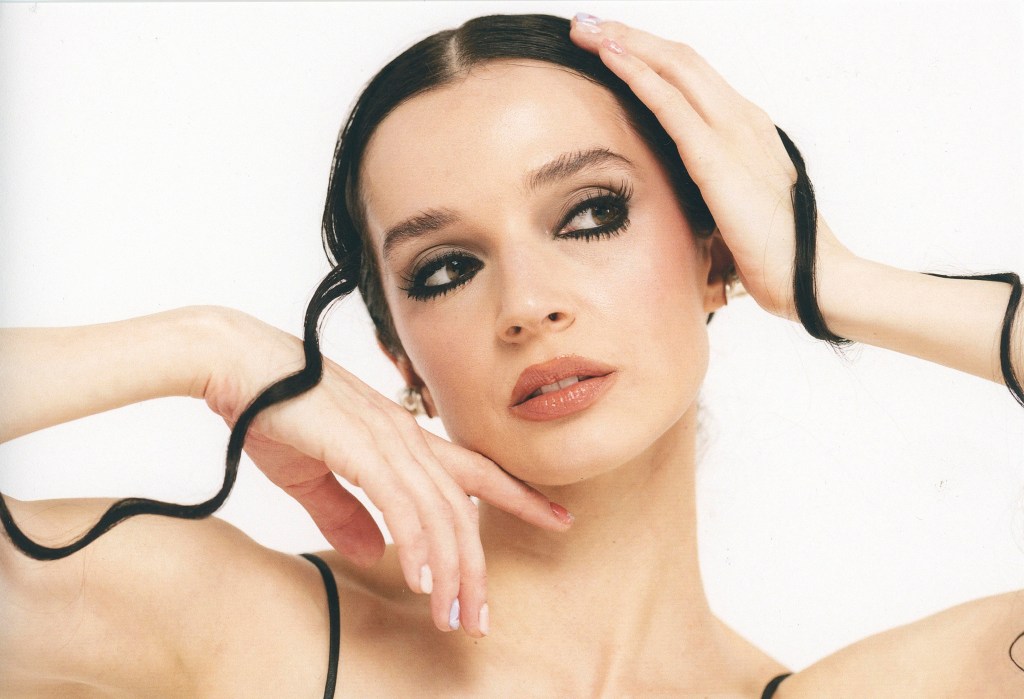
Today, Poppy drops Empty Hands, her seventh studio album via Sumerian Records, and with it comes a stark reminder: she refuses to play by anyone else’s rules. Emerging from a career already marked by boundary-pushing experiments, GRAMMY nods, and uncanny performance art, Poppy now unleashes an album that’s equal parts disruptive, intoxicating, and unrelentingly ambitious. From the opening notes of Public Domain, a cold, electronic pulse layered with industrial grit, you know you’re entering a space where genres collide and expectations shatter. There’s a moment here that feels lifted straight from The Beautiful People era Marilyn Manson, but filtered through Poppy’s hyper-modern lens, a mechanical but somehow deeply human voice threading through the chaos. It’s both invitation and challenge: you can follow her, or you can stay behind.
Bruised Sky lands immediately after, and it’s almost cruel how effortlessly infectious it is. With over 3.8 million streams in less than three months, it’s clear that the hooks don’t just stick—they burrow. The chorus loops in the mind like an unshakable echo, each “Don’t try to tell me it’s as good as it’s gonna get. The feeling won’t leave ’til darkness takes me. Don’t forsake me (oh, oh, oh, oh)” a simultaneous comfort and jolt, a promise that Poppy is unafraid of vulnerability yet refuses to soften the blow. Breakdowns hit hard, almost punishing in their intensity, but the melodies remain impossibly sticky, balancing chaos and control in a way that few artists can manage.
Guardian picks up the pace, reminding listeners why her collaborations with Jordan Fish have been so lauded. The single’s 1.9 million streams in under two months are well-earned: it’s an anthem in miniature, a perfect collision of industrial edge and pop clarity. Poppy’s vocals—effortless cleans punctuated by razor-sharp screams—navigate the track’s sonic architecture with precision, and every hook feels meticulously designed to resonate both emotionally and physically, the kind of music that makes your chest vibrate even when your brain tries to process it analytically.
By the time Constantly Nowhere arrives, you’re lulled into a moment of exquisite tension. Just 28 seconds, yet the harmonized a cappella channels Imogen Heap with otherworldly beauty, a whisper before the emotional plunge of Unravel. That track slows the pace but not the intensity. It’s a spiraling exploration of fragility and catharsis, where pop sensibilities meet a raw, almost painful honesty. Poppy’s voice twists through vulnerability, erupting into harsh screams, then receding into a restrained, hauntingly beautiful finish. It’s a masterclass in pacing and emotional dynamics—a deep cut that rewards full attention.
Dying to Forget rips the listener from that quiet reflection. Aggressive, jagged, and unrelenting, it’s metal that hits like a freight train and refuses mercy. Poppy’s growth as a harsh vocalist is undeniable here; the track rattles your insides while somehow still flirting with melodic sensibilities that make you forgive the brutality even as it bruises you. And just when you think she might relent, Time Will Tell drops a deceptively laid-back intro before slicing into a modern-metal juggernaut. This is Poppy’s undeniable signature: moments of calm that betray explosive power lurking just beneath, a tension-and-release aesthetic that keeps you on edge without ever feeling contrived.
The album doesn’t let up. Eat the Hate and The Wait are exercises in controlled chaos, riffs that grind like industrial machinery, punctuated with vocals that oscillate between angelic clarity and guttural menace. If We’re Following the Light and Blink are further proof that Poppy’s melodies are disgustingly infectious; they lodge themselves in your mind while the guitars and electronic textures assault every other sense. Then Ribs sneaks in with its uncanny, almost alien harmonics, a reminder that this is a musician unafraid to experiment with sound in ways that unsettle as much as they thrill.
Finally, the album crescendos with Empty Hands, a track that somehow manages to surprise even after 12 songs of relentless energy. Here, Poppy drops into full deathcore territory—a genre pivot so sharp it’s almost jarring, yet it feels completely earned. The transition from melodic pop hooks to crushing riffs and guttural vocals is flawless; it rattles the listener precisely because it was unexpected, and yet, in the context of her evolution, it feels inevitable. 39 minutes of music feels fleeting because every second is densely packed, meticulously crafted, and emotionally potent.
Having witnessed Poppy open for Avenged Sevenfold in 2024, I admit I approached this album cautiously. Live, I’d been critical—not because her performance lacked skill, but because I didn’t fully connect with her approach. That disconnect completely evaporates here. Across Empty Hands, every vocal, every breakdown, every unexpected twist screams (pun intended) that Poppy has ascended to a stratosphere where artistic ambition and technical mastery coexist effortlessly. Collaborations with Knocked Loose, Amy Lee, and Courtney LaPlante only underscore this trajectory, proving that she’s not just participating in the alt-metal landscape—she’s actively redefining it.
This is a record that makes you sit up, pay attention, and reconsider assumptions about genre, scope, and what an artist can achieve when they refuse compromise. Poppy’s cleans are near-effortless, her harsh vocals refined and precise, her compositions a relentless push-pull between accessibility and extremity. She blends metal, industrial, pop, and avant-garde flourishes with a finesse that feels unapologetic yet meticulous. And, perhaps most crucially, she does it with an eye toward shaping the space itself, rather than merely existing within it.
Empty Hands is not just an album—it’s a statement. It’s a manifesto of control, chaos, and the uncanny ability to traverse extremes without losing cohesion. Every hook, scream, breakdown, and melody is calibrated to shock, enthrall, and stick. And through it all, there’s a subtle undercurrent of triumph: the triumph of an artist who has been building quietly, deliberately, and unapologetically—despite being ignored, undercut, or sidelined by the very gatekeepers she now eclipses with a single release.
By the final note, when deathcore emerges without warning, the listener is left breathless, rattled, and convinced that Poppy is not just a figure in the alt-metal world—she is the disruptive force reshaping it. It’s an album that doesn’t ask permission and doesn’t settle for mediocrity, a record that lands exactly where it intends to: in your mind, in your chest, and in the larger discourse of modern metal and experimental pop.
To witness Empty Hands is to witness an artist fully realized, fearless in scope, and unapologetically herself. Poppy doesn’t merely exist in the alt-metal sphere—she dominates it, bends it, and leaves every listener aware that what comes next will be just as unpredictable, just as exhilarating, and just as essential.
If you’re paying attention—and you should be—this album isn’t just a milestone for Poppy, it’s a wake-up call for anyone still measuring creativity by convention. She’s ascended to a new plateau, and those of us lucky enough to cover her work are left to trace the trajectory of brilliance she leaves in her wake.
Verdict: 4.5/5



Leave a Reply