Ryan Murray | Co-Owner | Chief Editor | Contributor | Photographer
r.m.music84@gmail.com
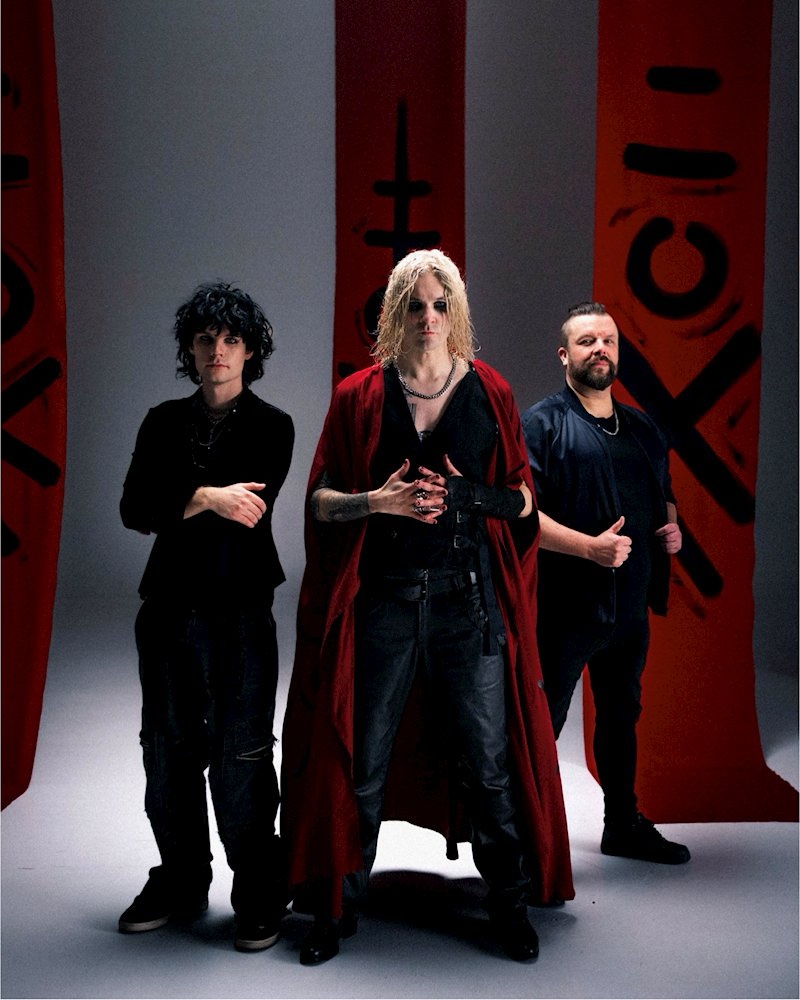
There’s a certain mythology that forms when musicians stop being “former members of bands” and start becoming something else entirely. HOKKA feels like one of those moments. Not a project built in spreadsheets or label meetings, but something carved out of shared loss, late-night conversations, and the kind of silence that follows when a band stops being a family.
Joel Hokka steps into this like a man carrying the weight of everything he’s already survived. Pauli Rantasalmi, meanwhile, doesn’t feel like a mentor in the traditional sense—he feels like someone who’s already walked through the fire long enough to recognize what survives it. The “warrior and the sensei” framing isn’t marketing poetry here. It’s the architecture of the record itself.
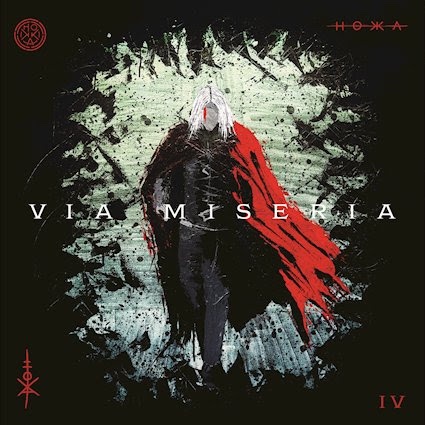
And somehow, Via Miseria IV doesn’t just introduce a band, but rather rebuilds one.
What’s immediately striking is how naturally this collaboration breathes. Joel’s history with Blind Channel brings that sharpened, modern alt-metal urgency—the kind that can turn pain into something stadium-sized. Pauli brings the lineage, the melodic instinct that once helped shape The Rasmus into a global force, along with decades of understanding how to make a hook feel like a memory you’ve already lived. Add Jimi Aslak on drums and the chemistry feel assembled—it feels awakened.
From the opening stretch of the record, you can hear that duality forming. There’s aggression, yes, but it’s never just noise. Blackbird sets the tone with something almost symbolic—flight, collapse, rebirth. It bleeds directly into In the Darkness, the first true statement of intent, where that early-2000s Finnish rock DNA is unmistakable but sharpened into something heavier, more immediate.
By the time Death by Cupid’s Arrow arrives, the record has already settled into its identity—one rooted in contradiction, where love doesn’t heal, it wounds, and affection lands with the force of impact rather than comfort. It’s here that HOKKA really begin to blur the emotional lines, turning something traditionally soft into something sharp-edged and volatile.
What makes the track hit even harder is how effortlessly it disguises that weight. The irresistible pop sensibilities woven through it—those sleek melodies, that almost anthemic pull, feel deceptively bright on the surface, like something you could lose yourself in without thinking twice. But underneath, there’s tension coiling in every note. The hooks seem to linger with intent, wrapping themselves around lyrics that cut deeper the longer they sit with you.
Then Via Miseria arrives like a title track should: not as explanation, but as immersion. The record stops behaving like a collection of songs and starts feeling like a landscape. One where heartbreak isn’t an event—it’s weather. That atmosphere continues into Heart Said No, where refusal becomes its own kind of tragedy, not loud, but devastating in its restraint.
And then there’s Bon Apetit, which should not work on paper and absolutely refuses to behave in reality. It’s swaggering, jagged, almost theatrical in its delivery—imagine if the glam bite of Adam Ant collided with something darker, more industrial, and just a touch unhinged. There’s a sense of humor in it, but also danger. It grins while it bites. It’s the kind of track that doesn’t ask for permission to be catchy—it just is.
Murder Ballad follows, and it pulls the floor out from under everything. The energy collapses inward. The album starts bleeding emotion—raw, unfiltered, and almost suffocating in its weight, like it’s stopped performing anything at all and is just letting the feeling spill out as it is. This is where HOKKA stops being cinematic and becomes uncomfortably human. You can feel the weight of it in Joel’s delivery, like every line is being dragged up from somewhere he’d rather leave buried. There’s no distance here, no performance buffer—just deep-seated heartache that sits heavy and unresolved.
And it’s exactly that emotional freefall that makes Angels Fall hit the way it does. It becomes the exhale that still hurts. Riff-heavy, yes, but also strangely luminous in its structure. The guitars don’t just drive the song, but they lift it in all its brilliance. Joel’s vocals, soaring at times and restrained at others, cut through that lift with something aching and exposed, like he’s trying to sing through impact rather than around it. It’s one of the album’s clearest moments of contrast: heaviness that somehow feels like release.
Then comes Serpent’s Song, and this is where HOKKA really locks into something hypnotic. The melodies coil and repeat, circling the same emotional ground until it becomes ritualistic. “It was you who took my heart, broke it in two” lands not as a lyric drop, but as a confession that’s been repeated too many times to soften the meaning. The ending doesn’t resolve, rather it dissolves, pulling the listener into something trance-like, almost suspended.
And then there’s the curveball: Kiss from a Rose. Covering Seal is always a risk, especially with a song so culturally embedded in its original form. But HOKKA don’t attempt imitation—they rebuild it from the inside out. What was once smooth and romantic becomes darker, more cavernous, but also strangely more urgent. It doesn’t feel like a cover trying to honor the original. It feels like a reinterpretation that discovered something new buried inside it. That balance—respect and reinvention—is where the band really proves its identity.
Across the entire record, what stands out most is how unforced everything feels. Pauli’s influence isn’t about dominance—it’s about space. He knows when to step back and let melody carry weight instead of distortion. Joel, meanwhile, doesn’t lean into excess; he leans into truth, even when it cracks his voice open. Together, they create something that feels way less like a “supergroup” and more like a necessary and inevitable collision.
Even the production understands restraint. There’s polish, but not sterility. Weight, but not overcomplication. The record breathes in the spaces between its intensity. You can hear the intention in every shift—from aggression to vulnerability, from melody to rupture. Nothing feels accidental, but nothing feels overworked either.
By the time Via Miseria IV closes its circle, you’re left with the sense that this wasn’t about starting over. It was about translating everything that came before into something survivable. There’s pain here, yes, but also clarity—the kind that only arrives after everything else has already burned down.
HOKKA doesn’t sound like a debut in the traditional sense. It sounds like arrival after displacement. Like two lifetimes finally intersecting at the exact point where sound becomes memory again.
And if this is what the beginning sounds like, the real question isn’t what they’ll do next—it’s how much more of this emotional terrain they’re willing to uncover before it starts uncovering them.
VERDICT: 4.8/5


Leave a Reply