Ryan Murray | Co-Owner | Chief Editor | Contributor | Photographer
r.m.music84@gmail.com
I have found that healing is rarely a straight line.
It’s messy. It’s painful. It is filled with moments of despair, flashes of rage, and the temptation to remain trapped within wounds that refuse to close. Yet somewhere within that darkness exists the possibility of transformation. Not forgetting. Not pretending. But emerging from the other side stronger than before.
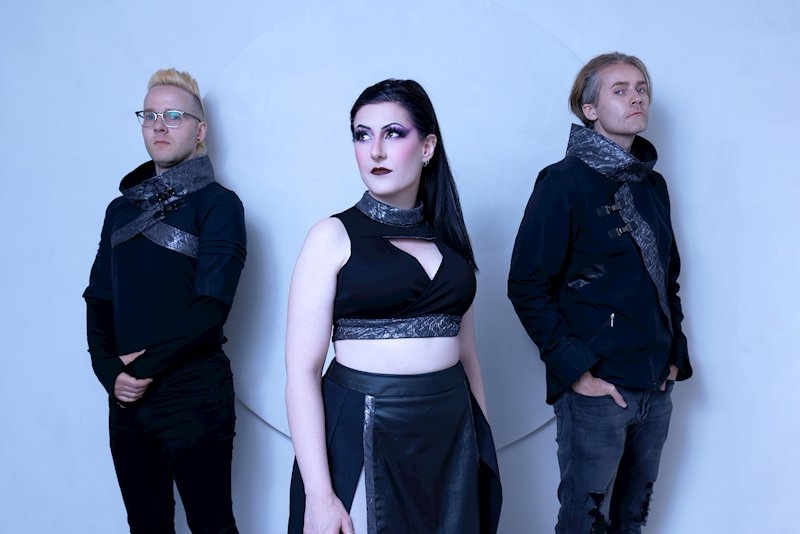
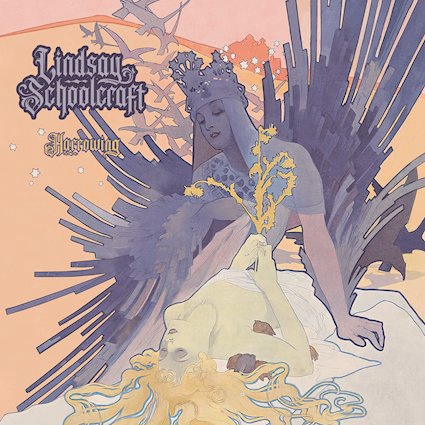
That journey sits at the very heart of Harrowing, the third full-length studio album from Lindsay Schoolcraft.
Known for blending metal, electronics, orchestral arrangements, and deeply personal songwriting, Schoolcraft has never shied away from vulnerability. However, Harrowing feels fundamentally different from anything she has released before. This is not merely another chapter in her evolution as an artist. It is a confrontation. A reckoning. A deliberate examination of trauma, survival, and ultimately, freedom.
Written between 2022 and 2024 and co-produced alongside Justin deBlieck, whose work with Motionless In White and Ice Nine Kills has helped define some of modern metal’s most ambitious productions, Harrowing pushes Schoolcraft into significantly heavier territory. The electronic elements remain, as do the strings, choirs, and cinematic textures that have become part of her artistic identity, but they are now accompanied by sharper edges, heavier riffs, and a newfound sense of urgency.
Most importantly, however, the album never loses sight of its emotional core.
From its opening moments, Harrowing establishes itself as an intensely personal work. Inspired by the aftermath of narcissistic abuse, the album unfolds as a seven-part journey through healing, with each song representing a different stage in the process. Awareness. Sorrow. Anger. Revenge. Hope. Acceptance.
The result is not simply a collection of songs, but a carefully constructed emotional narrative.
Opening track Mercy Has Come immediately immerses listeners within that atmosphere. Despite its brief runtime, the song accomplishes exactly what an introduction should. Dark strings, synth textures, and downtuned guitars create a haunting backdrop while Schoolcraft’s voice drifts through the arrangement with equal parts vulnerability and determination. There are echoes of Evanescence’s Origin era throughout the track, particularly in its ethereal darkness, yet it remains unmistakably her own.
Lead single Crucified stands as one of the album’s defining moments. Built around religious imagery and themes of betrayal, empowerment, and survival, the song perfectly captures the album’s willingness to confront uncomfortable truths head-on. Schoolcraft’s vocal performance is mesmerizing throughout, balancing haunting restraint with moments of explosive intensity. The modern production elevates every element, allowing the track to feel simultaneously massive and intimate.
It is also one of the clearest examples of what deBlieck brings to the table. The guitars hit harder. The electronics feel more purposeful. Every layer serves the emotional weight of the song rather than simply existing for atmosphere.
Throughout Harrowing, collaboration plays a significant role in shaping the album’s sonic identity.
Returning contributors Rocky Gray, Spencer Creaghan, and Brian Cook once again help expand Schoolcraft’s musical vision. Creaghan’s orchestral arrangements continue to add cinematic depth and emotional gravity, while Gray’s compositional contributions help reinforce the album’s heavier foundation. Together, they create a sonic landscape that feels expansive without ever overwhelming the songs themselves.
Equally important are Schoolcraft’s own band members.
Guitarist Cody Johnstone and drummer Dylan Gowan prove instrumental in bringing these songs to life. Johnstone’s guitar work frequently shifts between atmospheric textures and crushing riffs, while Gowan delivers performances that provide both power and restraint exactly where the material demands it. Rather than functioning as supporting musicians, both feel like essential contributors to the album’s overall identity.
That chemistry becomes increasingly apparent as the record progresses.
Vague represents one of the album’s emotional high points. Few songs capture facing hopelessness and uncertainty with such honesty. Driven by hypnotic grooves, synth-laden melodies, and dynamic guitar work, the track explores fear without ever becoming consumed by it. Schoolcraft’s ability to transform deeply personal experiences into universally relatable emotions remains one of her greatest strengths, and nowhere is that more apparent than here.
Meanwhile, I Wait For You To Fall introduces one of the album’s most unexpected moments.
Drawing heavily from late-90s and early-2000s pop-punk energy, the song feels almost nostalgic in its presentation. There is an infectious, MTV-era immediacy to the track that makes it instantly memorable. Yet beneath its more accessible exterior remains the emotional complexity that defines the rest of the album. The contrast here works beautifully, proving once again that Schoolcraft is unwilling to be confined by genre expectations.
That refusal to remain predictable continues with Cut Your Teeth.
Opening with dark wave-tinged synths, atmospheric pads, and haunting vocal layers, the song gradually evolves into one of the album’s most empowering moments. There is a quiet resilience woven throughout its structure, as though the scars discussed elsewhere on the record have finally begun transforming into strength. The track expertly balances vulnerability and defiance, pairing soaring choruses with cinematic production that allows every element room to breathe. Once again, deBlieck’s influence is undeniable, helping blend electronics, orchestration, and metal into a cohesive whole.
Then comes So Alive.
Featuring guest vocalist Krista Shipperbottom, I have absolutely no hesitation in calling this the heaviest song of Schoolcraft’s career.
Shipperbottom’s ferocious harsh vocals inject a level of aggression rarely heard in Schoolcraft’s music, creating a striking contrast against Lindsay’s soaring melodic performance. The result is explosive. Crushing riffs, thunderous percussion, layered orchestration, and one of the album’s strongest vocal pairings combine to create an undeniable standout. Rather than feeling like a guest appearance for the sake of novelty, Shipperbottom’s contribution feels entirely essential to the song’s emotional impact.
It is a reminder that healing is not always gentle.
Sometimes healing sounds like rage.
Sometimes it sounds like reclaiming power.
Sometimes it sounds like finally refusing to remain silent.
Yet despite the album’s darker themes, Harrowing ultimately refuses to leave listeners trapped within despair.
Its greatest achievement lies in its willingness to move forward.
Where many albums centered around trauma remain focused solely on the pain itself, Schoolcraft chooses a different path. She acknowledges the damage. She confronts it directly. She allows listeners to sit within those emotions. But she never allows them to become the final destination. That distinction is crucial when listening through the album.
By the time closing track Chase The Dark arrives, the emotional landscape has shifted significantly. Schoolcraft’s hypnotic vocals float effortlessly above a mid-tempo arrangement that feels reflective rather than defeated. The darkness remains present, but it no longer controls the narrative. What emerges instead is acceptance.
Not forgetting.
Not excusing.
But letting go.
In many ways, that final realization encapsulates everything Harrowing represents.
This is an album born from suffering, but it is not defined by suffering. It is an album about survival, but it is equally about growth. It acknowledges anger, sorrow, fear, and revenge while ultimately arriving somewhere far more meaningful.
Freedom.
With Harrowing, Lindsay Schoolcraft delivers the most emotionally honest, sonically adventurous, and artistically complete work of her career. Supported by exceptional contributions from Justin deBlieck, Spencer Creaghan, Rocky Gray, Brian Cook, Cody Johnstone, Dylan Gowan, and Krista Shipperbottom, the album successfully transforms deeply personal experiences into something profoundly universal.
Harrowing is not merely Lindsay Schoolcraft’s heaviest work—it is her most fearless, transforming trauma into triumph without ever sacrificing the humanity at its core.
VERDICT: 4.8/5
PRE ORDER HERE!
 Ethereal Metal
Leave a comment